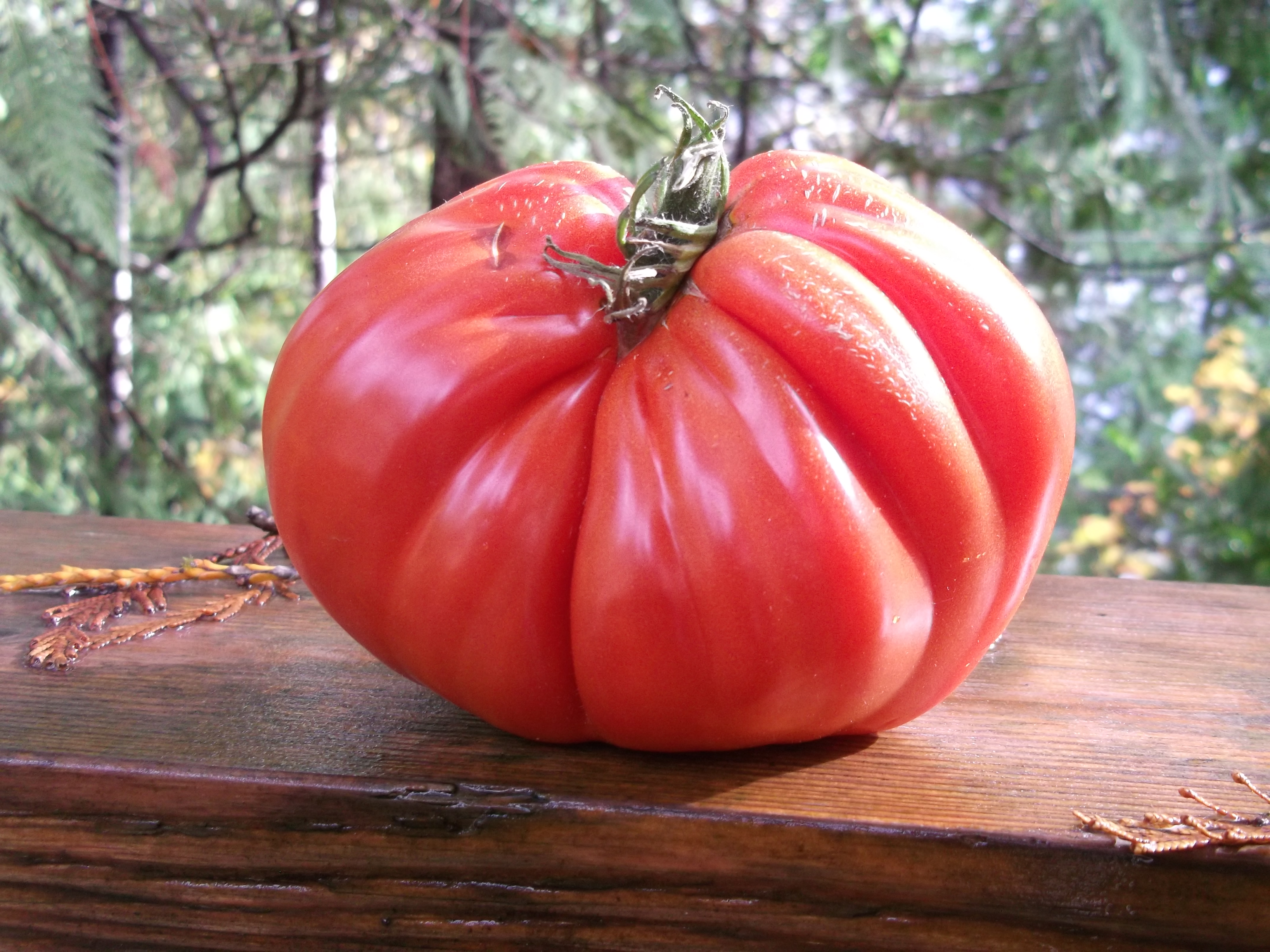
Toronto Love

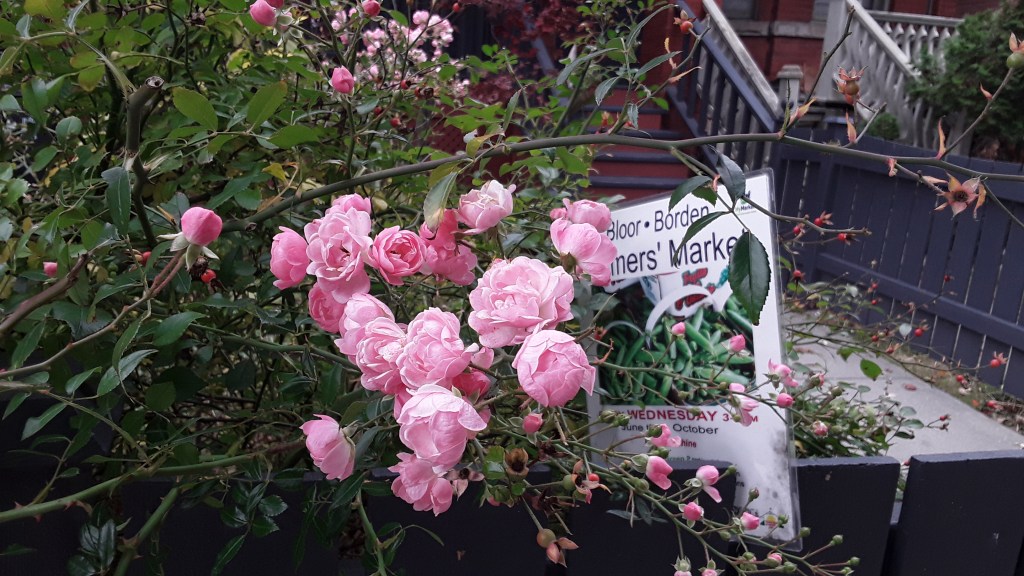
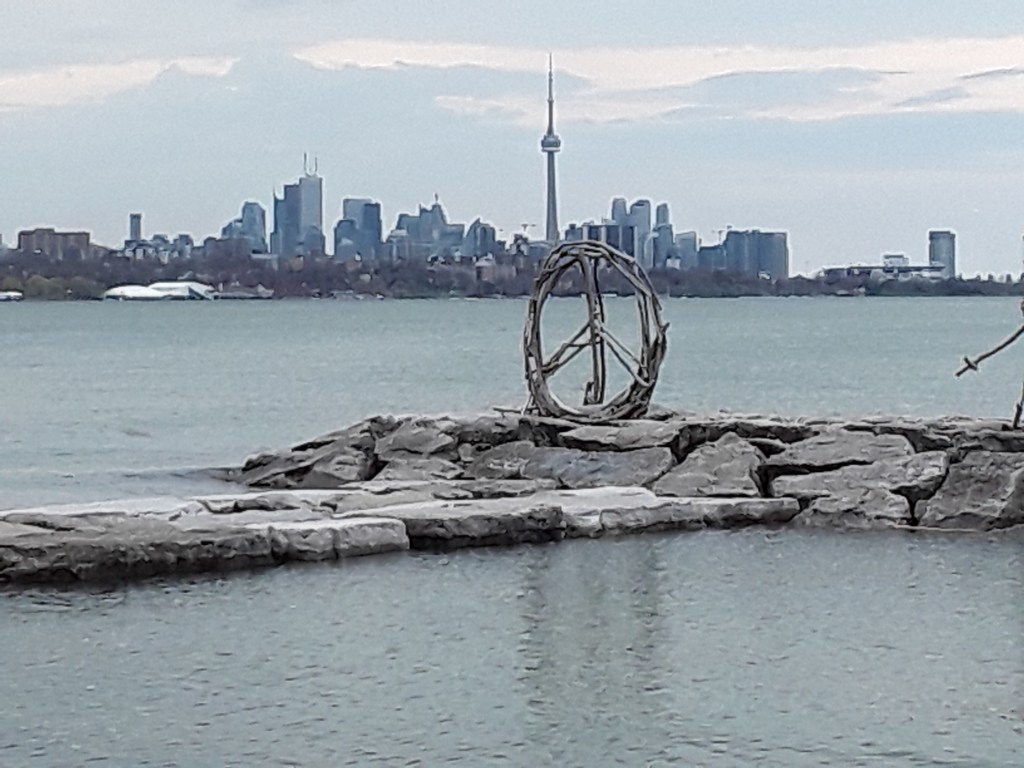
It is kinda weird, this compulsion I have to leave the serenity of my lakeside home and go willingly to the insane intensity that is Toronto. From my deck I talk on the phone to my friends there and I can hear them and imagine them, in their homes on the streets I know so well. I can almost smell it, feel the warm humid air, almost believe it exists in my absence. But no, I actually have to go there, fly above the planet and watch the earth moving below me from the window of the plane, feel the thrum of the engines confirming I am hurtling through space and time toward my destination. I get off the plane and immediately I feel it. I am in a different time zone, different climate, a whole different attitude. I am happy to set foot in my old hometown, yet after confirming it really is still here, I am tempted to turn around and go home, to my chosen home, but of course I don’t. I board a TTC bus and soon I am zooming along the Bloor subway line, an immediate immersion into the gritty city. I emerge into my old hood and pull my convenient carry on through the brightly lit and littered downtown streets. It is a warm evening and the restaurant patios and bookstores are buzzing. The angry sounds of traffic, the smell of cigarettes and pot and garbage, the lovely singing of a busker all welcome me. I turn the corner onto the street where my mother lived for forty years and where our family home remains. Ridiculously overgrown feathery cosmos tower over me and block my path. Dahlias and climbing roses spill over fences fronting the narrow brick Victorian era homes. Toronto is a surprisingly verdant city, gardens are abundant. The hot summer days and warm nights make for huge blossoms and creeping vegetation.
My first visit is a dim sum lunch with an old friend, a leisurely walk away through cozy residential streets to bustling Spadina Ave. in Chinatown. Not much has changed here in the last fifty years. Favourite restaurants disappear but others pop up. Chefs and kitchen junkies come from all over come to shop in the stores packed with all manner of crockery, cooking utensils and housewares. Fresh produce and iced seafood is piled high in giant bins blocking the already congested sidewalks in front of cavernous grocery stores. You need fortitude and sharp elbows to make your way through the throngs if you wish to enter. Old women squat on the wide sidewalks with dreary displays of bunched herbs and roots and tiny pots of succulents at their feet. Young men sell knockoff watches, Kung Fu videos and cheap electronics from rickety card tables. It is wonderfully crowded and chaotic and for me it will always be a bit mysterious.

Our dim sum is fresh and packed with flavour, steamed eggplant stuffed with shrimp, crispy tofu in a rich sauce, oily compressed radish cake, plenty of ginger, garlic and chives. This meal alone is worth the three thousand mile trip. When we are finished our server wraps up all the dishes in the plastic table cloth and hoists it over his shoulder, leaving a pristine shiny surface for their next guests. Brilliant.
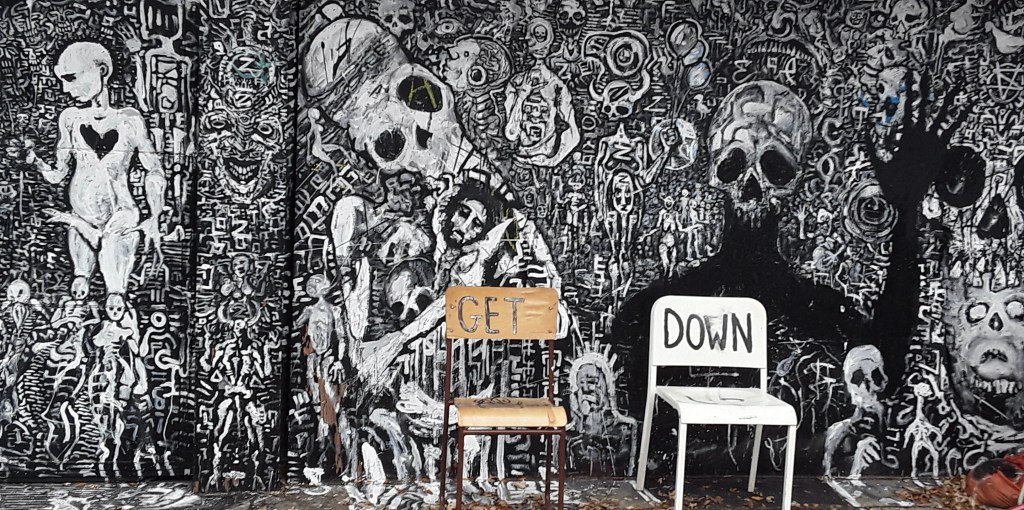
Kensington Avenue Art

Five minutes and a couple of blocks later and we have left Chinatown and are surrounded by vintage clothing stores, taco shops and the most diverse neighbourhood in this wonderfully diverse city. Kensington Market’s narrow streets are crowded with old brick one and two story buildings in various stages of disrepair. This area, which was originally an upscale residential neighbourhood, has been a draw for entrepreneurial immigrants and refugees looking for a home since Jewish settlers, fleeing Eastern Europe arrived in the early 1900s. Every few decades it seems the predominate population disperses and makes way for a new group of arrivals. When we first started shopping here in the 70s a few Jewish businesses remained, but Portuguese grocers and fish stores lined the streets. Asian and Caribbean stores popped up and in the 80s a wave of Latin American refugees moved in. The 80s also brought an influx of artists, musicians, punks, junkies, street people and rebels. Murals and random art installations decorate the streets and smoke filled dive bars nestle in between the bakeries, butchers and cheese stores. Rastafarians and spike haired punks share spliffs on street corners. This disparate but somehow organized group of residents have so far managed to keep gentrification at bay. This is one of my favourite places in the world, my body and soul happily thrive on all the Market has to offer. It is seedy and slightly depraved and hard core urban. Wandering back to my pad on my last visit I came across an impeccably dressed traditional Mariachi band entertaining the party people on the crowded patios. The music, the fairy lights, the happy crowds and the smell of grilled meat and tortillas take me to Mexico. I feel completely at home.
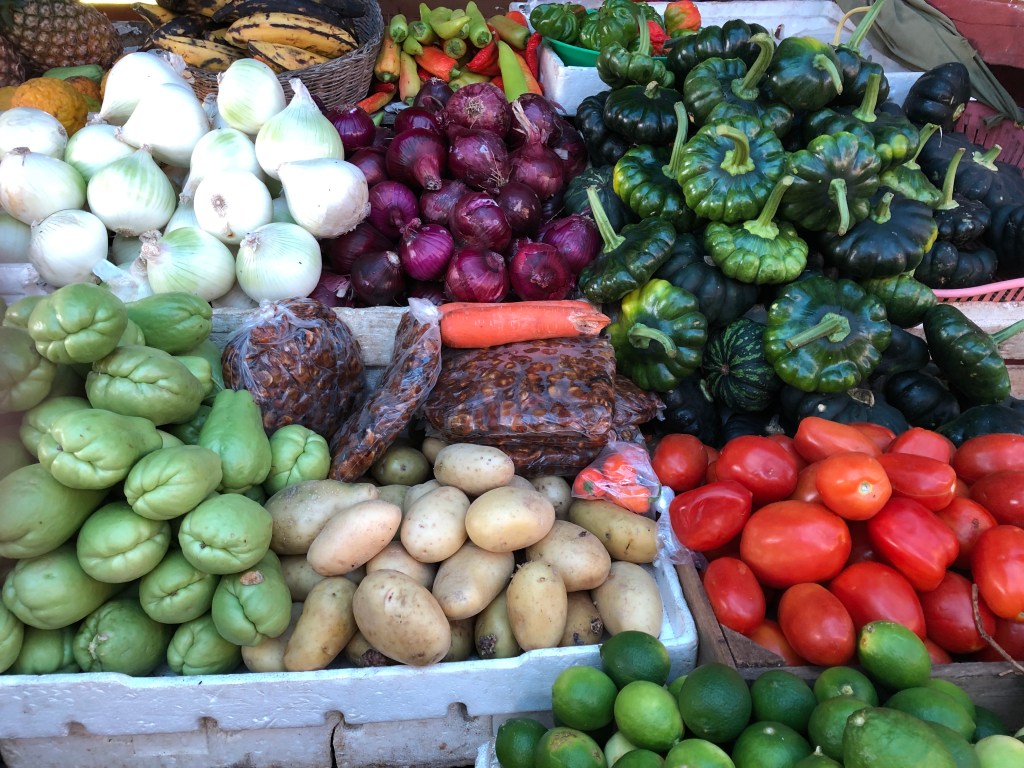
Latin American grocery store, Augusta Avenue.

The busy street a block away from our family home has also gone through many changes of veneer since I first started hanging around there as a teenager. Goodbye to the grotty bars, second hand book stores, Italian greengrocers and Hungarian diners where we gathered as students in the 70s to drink endless espressos and discuss third world politics and theatre of the absurd. Hello to all you can eat sushi, ramen and Vietnamese noodles. This area is home to students and academics and the genteel left that have always been the Annex. Some arty coffee shops remain, and one of the grubby old pubs still stands. Thankfully Future Bakery has survived with it’s cheap filling food and massive shady patio, but across the street the historic brick building which once housed two cavernous floors showcasing world class blues and local acts is now occupied by a Value Village. I am always happy to see that Ghazele is still there, a tiny storefront run by friendly women in hijabs presiding over platters of grilled vegetables, verticle rotisseries, bright salads and sauces, all perfectly spiced and beautifully presented. It is almost impossible to walk by without stopping for falafel or a samosa or one of their overstuffed and ridiculously cheap veggie wraps.

I never seem to have enough time in Toronto to eat everything I want. This last visit I never did get around to Jamaican roti or Chinese steamed buns. I do like to cook a meal or two when I am there, mostly because I get to shop at Fiesta Farms, a huge Italian grocery store my late mother visited almost daily. The long hot summer days and warm nights bring deep flavours and Ontario grows some of the best produce I have ever had. I want everything but settle on strawberries, Italian pastries and ingredients for a risotto, one of my mother’s stand by recipes and still a favourite of her husband.

When I start to become overwhelmed by all of the never-ending activity and endless options and the feeling of claustrophobia creeps up, it is time to go home. Seeing the ocean blue and the forest green as my plane descends over Vancouver Island makes me smile all over. Driving under towering trees and alongside ocean beaches and rivers my heart lifts as I get closer to my my little house by the lake. Here my food focus in on hyper local product, I do not seek out the foreign or exotic, partly because it is not readily available. I am always excited by what’s on offer from our local farms and foragers and producers. I do not miss the plethora of choices when I am not in Toronto but it is a big reason why I keep going back. And of course my people. I was so happy to meet up with some friends I haven’t seen in decades on my recent visit. Like Toronto, on the surface they had changed, but their essence, heart and soul remain the same. I will always love Toronto, I spent some of the best years of my life there. It is part of me and part of my heart will always be there.
Stories From the Other Side of the World

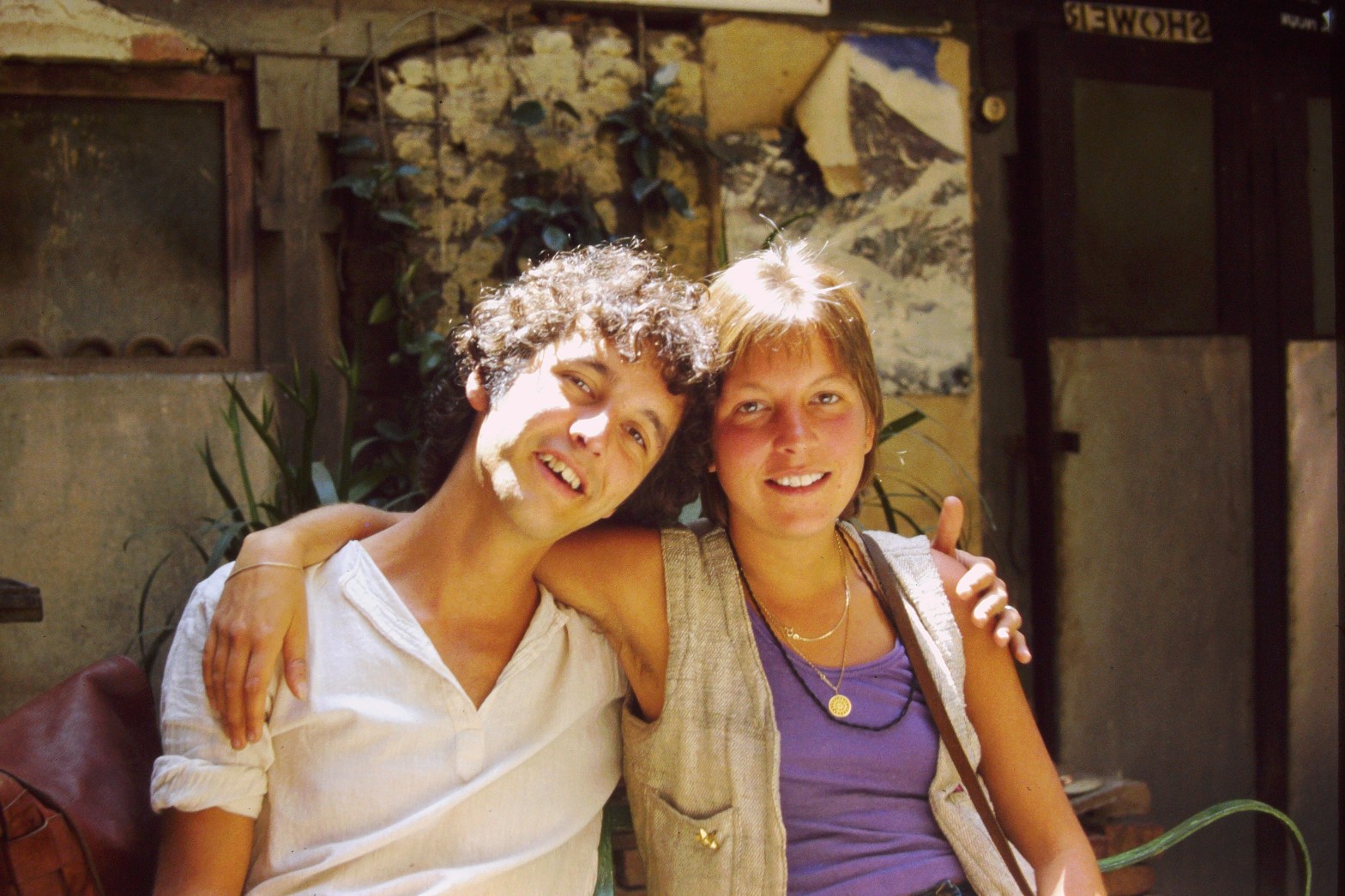
In loving memory of Michael Pasken. 

Kandy, Sri Lanka

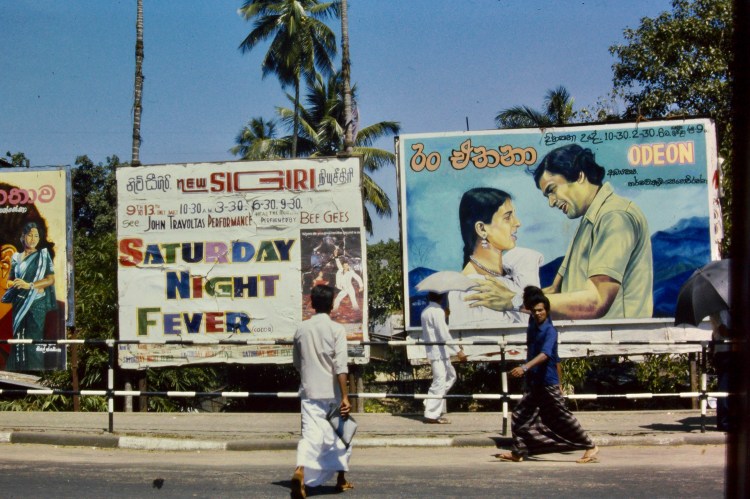
On December 18, 1980 I found myself on a flight from Thailand to Columbo, Sri Lanka. It was a surprise to me as I had arrived in Bangkok just that morning. I had been expecting to meet up with Michael and Phil and backpack through Thailand for the winter. However, my adventure-seeking friends had found Thailand too tame for their liking and had changed our plans. So here I was, heading to the Indian subcontinent with zero knowledge, planning, or research about my destination. Although I had previously spent a year living in Europe, I was pretty naive, I had no idea what I was getting into. I had my orange backpack, $600 in travellers checks, an open mind, and a hopeful heart.

 The backpacking culture which emerged from the bohemian 50s and the hippies in the 60s and 70s had created a new breed of nomads, vagrants, beachbums, outlaws, mystics, hedonists, stoners, explorers, and searchers who wandered the world wanting to disappear or to find themselves. I was initiated into this motley crew of international travellers that day. I had found my clan.

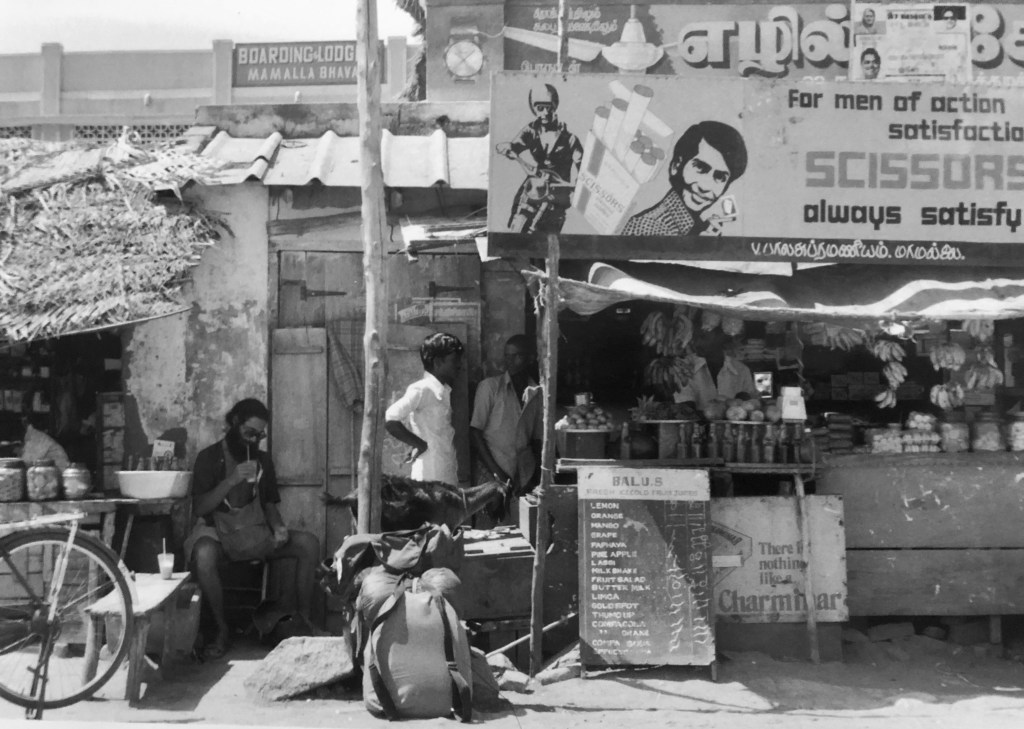
Roadside lassi stand. Sri Lanka.

Travelling was a true adventure then, there were few guidebooks and information was shared through conversation over a beer or cup of tea, or posted on the ubiquitous bulletin boards at back packers’ hotels and eateries on the global hippy highway. Post restante and American Express offices were another important source of communication. Letters home could be posted or retrieved. Messages from friends could be found or left in a box on the counter, and attempts at international phone calls could be made, often lasting all day with disappointing results. 

 We all carried tattered maps and journals filled with notes and hand-drawn maps and business cards gleaned from other travellers. We often didn’t know exactly where we were going, how we were going to get there, or what we would find when we arrived. It was challenging, exciting, often uncomfortable, sometimes dangerous, and we learned something new every day. 

Sri Lanka

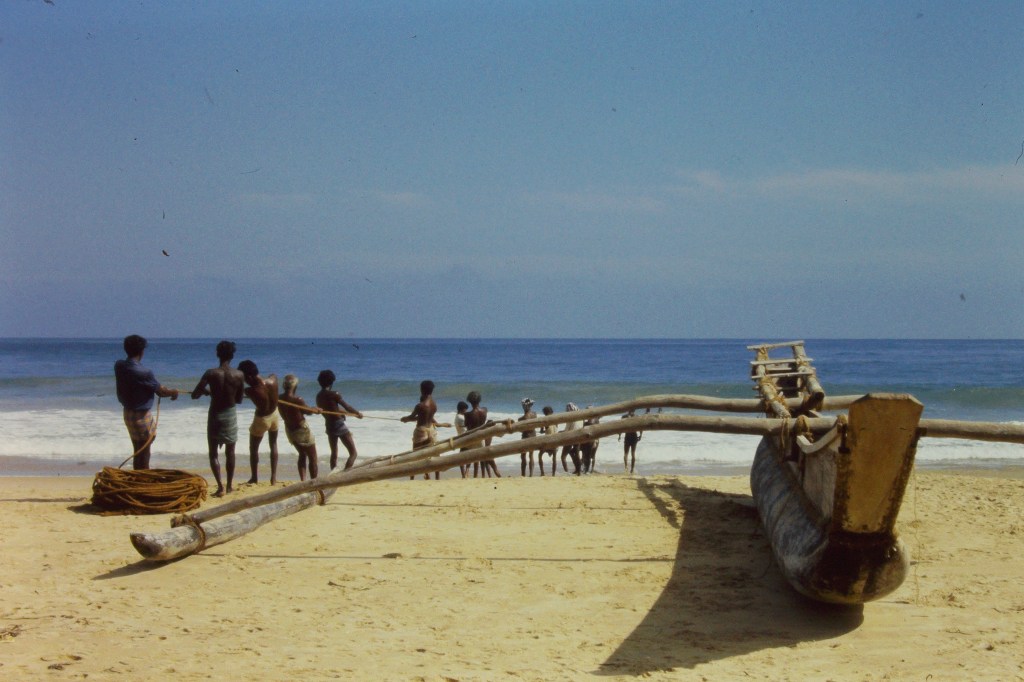
Pulling the nets on Hikkaduwa.

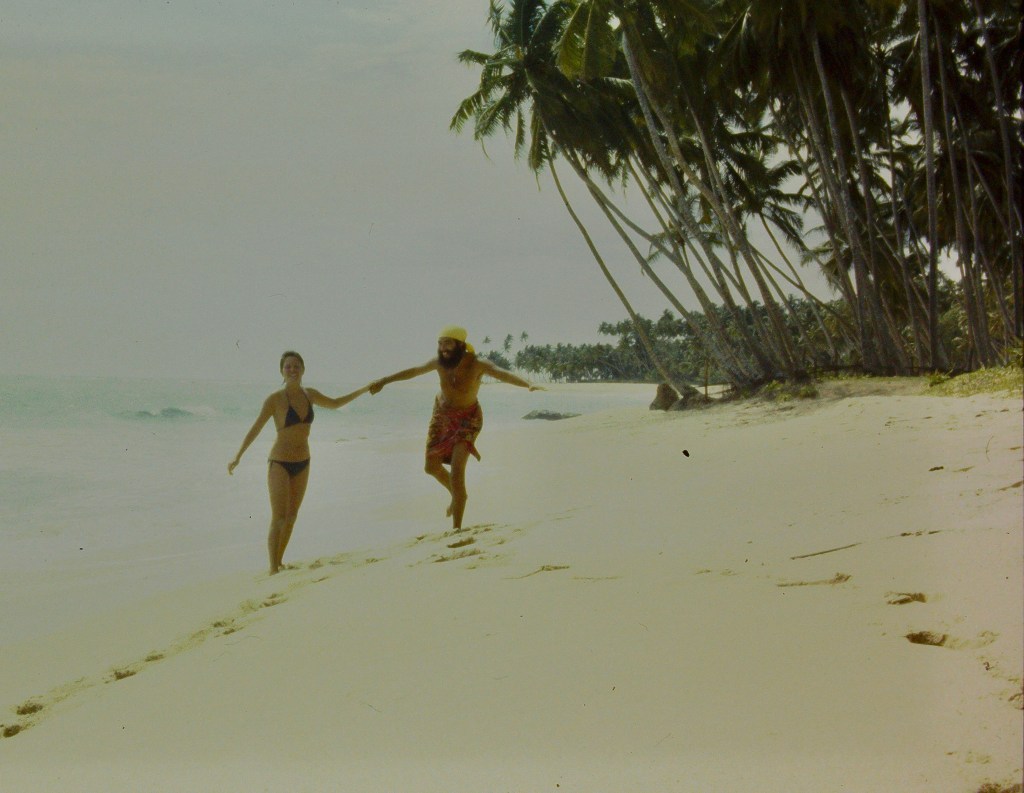
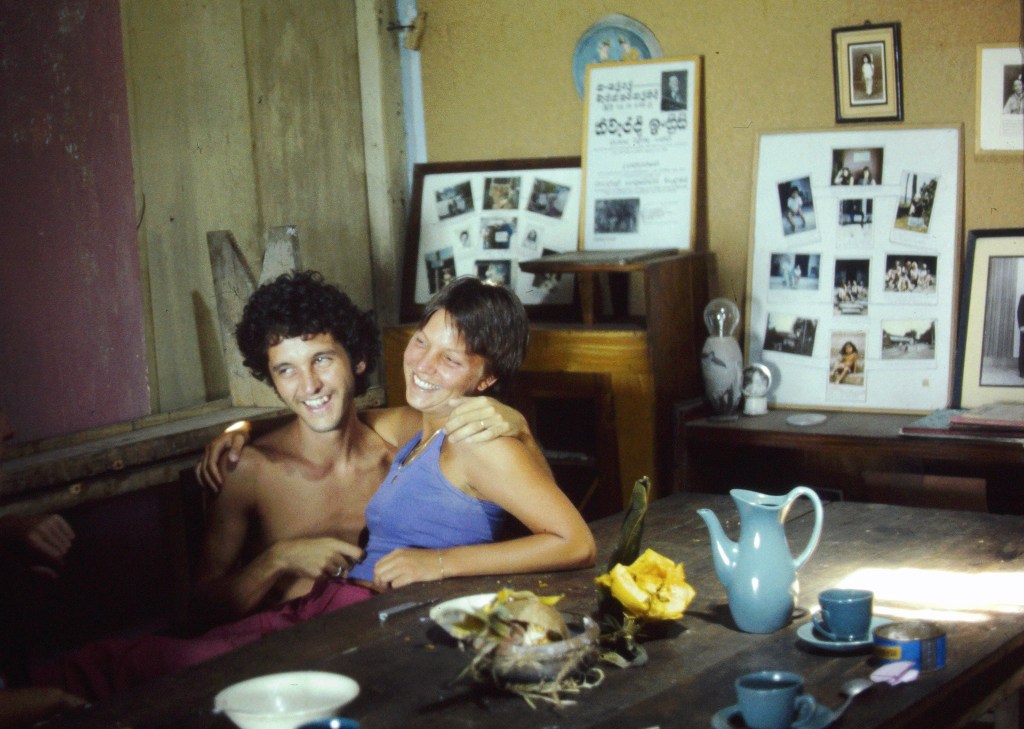
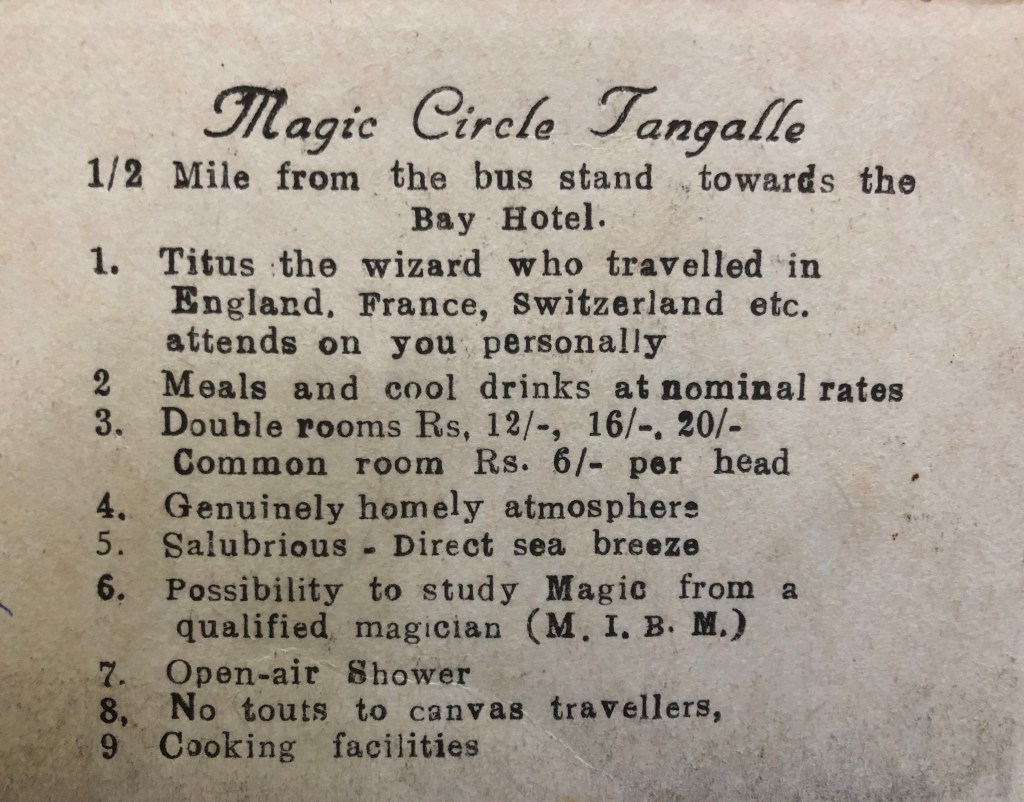
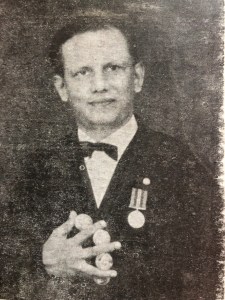
In the village of Hikkaduwa on a wide Pacific beach lined with impossibly narrow fishing boats and towering palm trees we celebrated Christmas and played on the beach which we shared with fishermen, surfers, and sea turtles. We spent the next few weeks exploring the southern part of this bright green jewel of an island. Our travels took us to Tangalle and the Magic Circle, a guesthouse run by our kind host the one and only Titus the Wizard. Our days were spent playing in the surf on the pristine beach or playing cards in the “genuinely homely atmosphere” of the Magic Circle, refreshed with tea and a “salubrious sea breeze”. From a rickety bridge we watched six-foot lizards devour a dog in the river. We followed huge butterflies down jungle paths that led nowhere. After a tropical downpour the roads became impassable for cars and we bounced around on the back of an oxcart. We became immersed in this bizarre world, the people we encountered were as surreal and surprising as the flora and fauna of the surrounding jungle and ocean.

Our host, Titus the Wizard.

Michael’s health had started to deteriorate. At an overcrowded hospital in Columbo he was diagnosed with hepatitis. We made our way to Kandy, the capital city in the mountainous interior, where we installed a yellow and gaunt Michael in a sanitized private clinic run by Jehovah’s Witness’. A wonderful family who owned the guest house we stayed in had befriended Michael and promised to look after him while he recovered, so Phil and I carried on, hoping to meet up with Michael down the road.

India

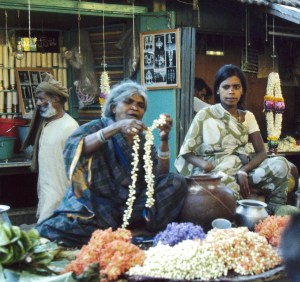
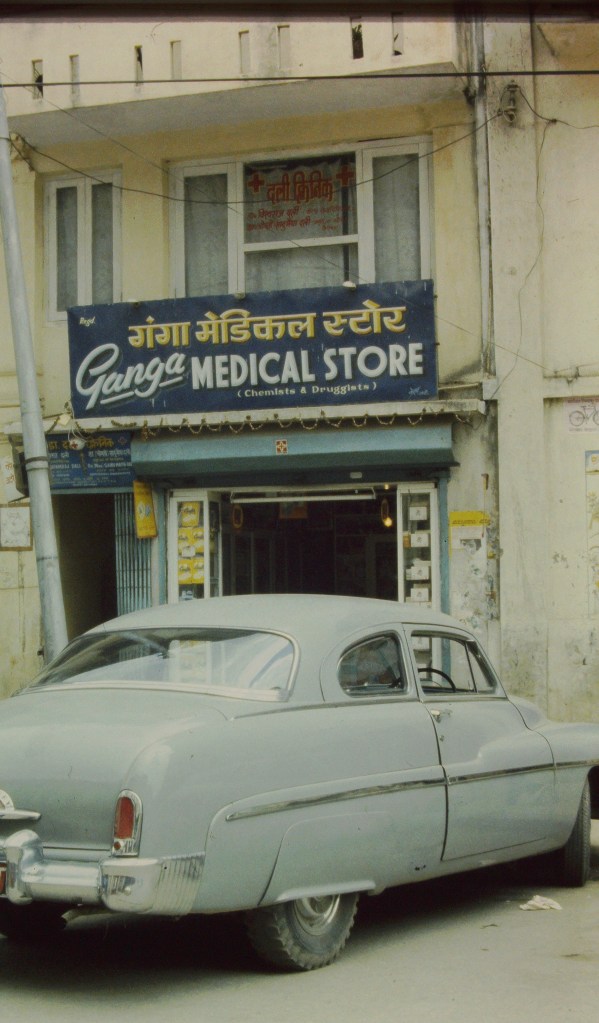
Our travels in relatively clean, calm, green pre-civil war Sri Lanka did not prepare us for the churning chaos that is India. The smell of decay and shit and incense and flowers, the holy men with their loincloths, dreds and begging bowls. People with broken bodies or minds, reaching hands and pleading eyes. Crumbling Victorian mansions with trim lawns and exquisite architectural monuments to the gods and goddesses of the many faiths practiced here. Fat bejewelled families perched on rickshaws, pulled by skinny loin-clothed men with opium glazed eyes. Roads snarled with old model American cars, ox carts, bicycles, motor bikes and tuk tuks, often brought to a standstill by a recumbent cow, calmly chewing its cud in the middle of the road. Greasy guys in tight western clothes and wraparound sunglasses, women draped in bright saris with gold on their wrists and dripping from their ears and nose. The volume of people conceiving, birthing, cooking, eating, shitting, worshipping, living, and dying on the streets was astounding.

Flower garlands for sale.

India is a country of extremes, it can provoke feelings of love, anger, awe, frustration, distress and hilarity, sometimes all in one day, or one hour. The challenges of communication, the pointless paper pushing, the endless festivals and curious customs made every day a bizarre experience. That ambiguous head roll and smile that is the mysterious answer to every question. Purchasing a train ticket or cashing a travellers check could easily turn into an all day affair. Worship is part of everyday life, not confined to temples or special days, religious processions and celebrations could fill the streets and block traffic for days. Street vendors were forever shooing away the urban monkeys and spoiled sacred cows trying to help themselves to a meal. There is no concept of personal space in India. People would often sit close to me and stare, sometimes reaching out to touch my blonde hair and pale skin. It was harmless but unnerving. Endless patience, a sense of humour and an appreciation of the absurd is essential for surviving India.

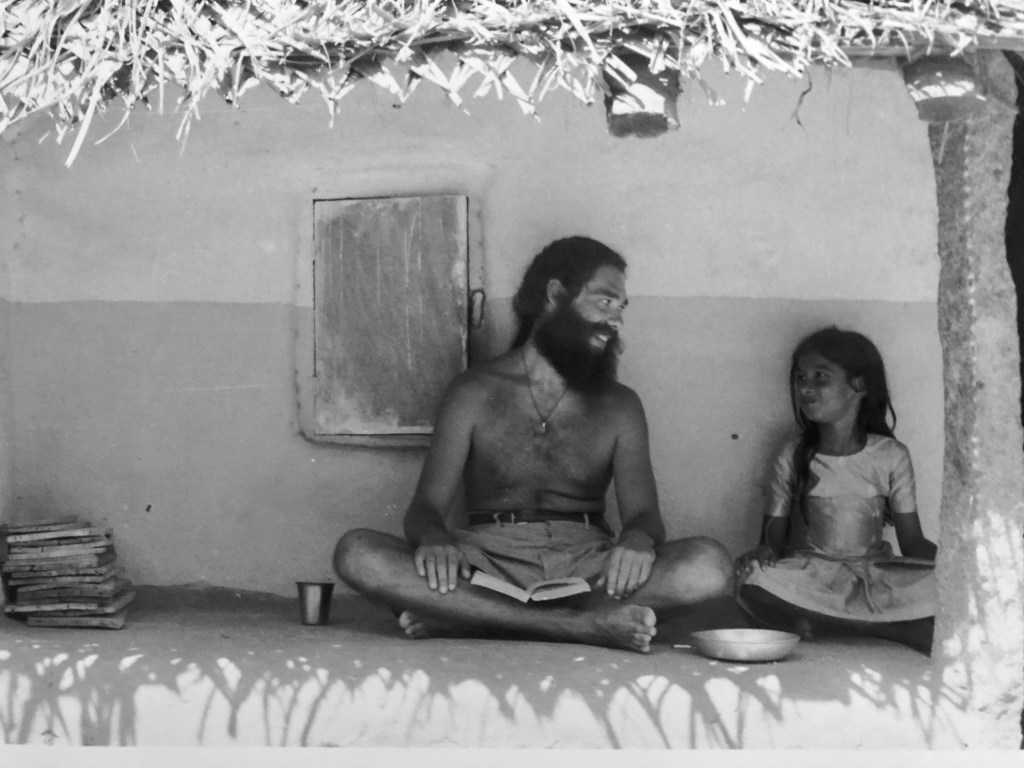
In the coastal village of Mahabalipuram in Tamil Nadu we stayed with a family who had a tiny two-room home and small subsistence farm. They generously gave up one of their rooms which had recently been coated in a fresh layer of cow dung, a practice that has been going for centuries for spiritual and practical reasons. The dung, once it has dried, does double duty repelling insects and evil spirits. The smell lingered slightly but was more pleasant than offensive. The cooking was done on an outside fire, wood was hard to come by so the fires and meals were small. Water was carried in jugs expertly balanced on the women’s and girl’s heads from the village well. The “toilet” was down a long path behind the house which led to the muddy shores of a shallow salt lake where one squatted. There were a few bushes but you daren’t go in, that was where the shit eating pigs rustled and grunted, jostling in anticipation of a warm breakfast.

We were treated with generosity and kindness by our host family, they made no special accommodation for us, they offered what they had. The youngest daughter took a shine to Phil and after school she loved to comb his long hair and beard. She attempted to do something with my short stringy locks, but was at a loss. Although I am sure whatever rupees we gave them for lodging were appreciated, they had so little space, food, and water to share in what appeared to be a cash free economy, providing for us had to be a burden. We didn’t stay long. I will forever be grateful to be welcomed into their home and will never forget them.

Phil and his friend.

South Indian food is gorgeous, vibrant colours and deep flavours. Sit down meals, or thalis, are served on a banana leaf or a metal plate, rice or flat bread are surrounded by beautiful vegetarian curries and chutneys, scooped and eaten with the fingers of the right hand. Street food was almost always deep fried and delicious. Breakfasts were often a half papaya filled with thick yogurt and sliced bananas and drizzled with treacle. Tea is the national drink and there were carts on every street corner serving the sweet hot beverage from enormous steaming kettles. Meat and alcohol were not available and I thrived on the clean diet.

Agra

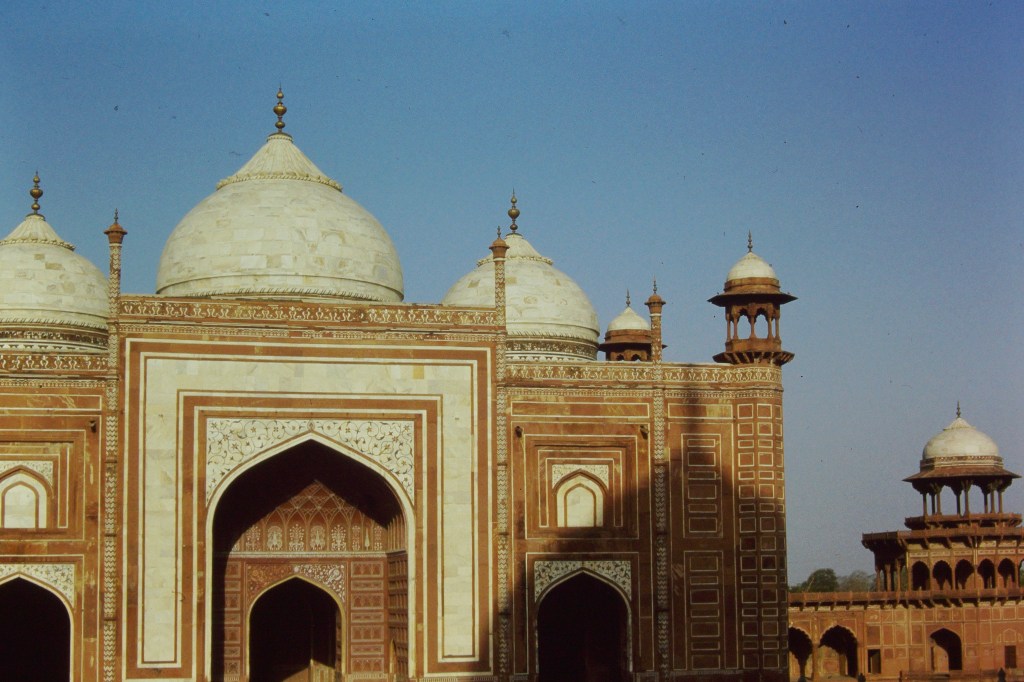
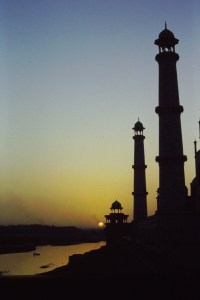
In Agra, under a full moon, we smoked opium fed to us through a complicated pipe while we reclined in a serene walled garden watched over by a goddess in the form of a long haired white cat. We later gazed upon the magnificent Taj Mahal from the back of a rickshaw, a bright white jewel reflecting the rays of the moon. We went back to the Taj the next day, sober, to explore it in daylight. I was unprepared to feel so moved by the beauty, detail, and the sheer size of this majestic and heartbreaking monument to love.

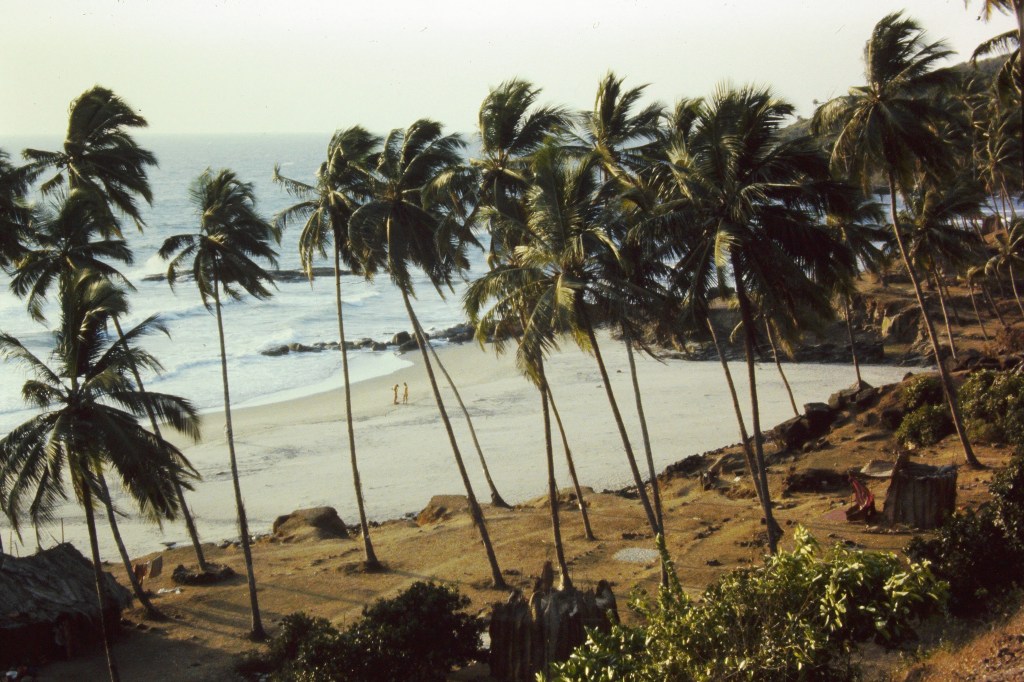
In Goa we rented an immense room in a dilapidated Victorian era mansion that was slowly being absorbed by the jungle. Our room had huge windows, a crazy high ceiling, and was furnished with two sleeping mats on the floor. Goa was, and probably still is, crawling with junkies and hedonists and seekers from all corners of the world. The restaurants served mushroom tea, banana pancakes, and hash brownies. I felt overdressed when I wore a bikini bottom on the picture perfect beach. It was beautiful and decadent and a little too cool for us. Leaving Goa, Phil went on to seek enlightenment from the mystic Bagwan Rashneesh at his ashram in Pune, and I continued north to Nepal.

Our room in Goa.

Nepal

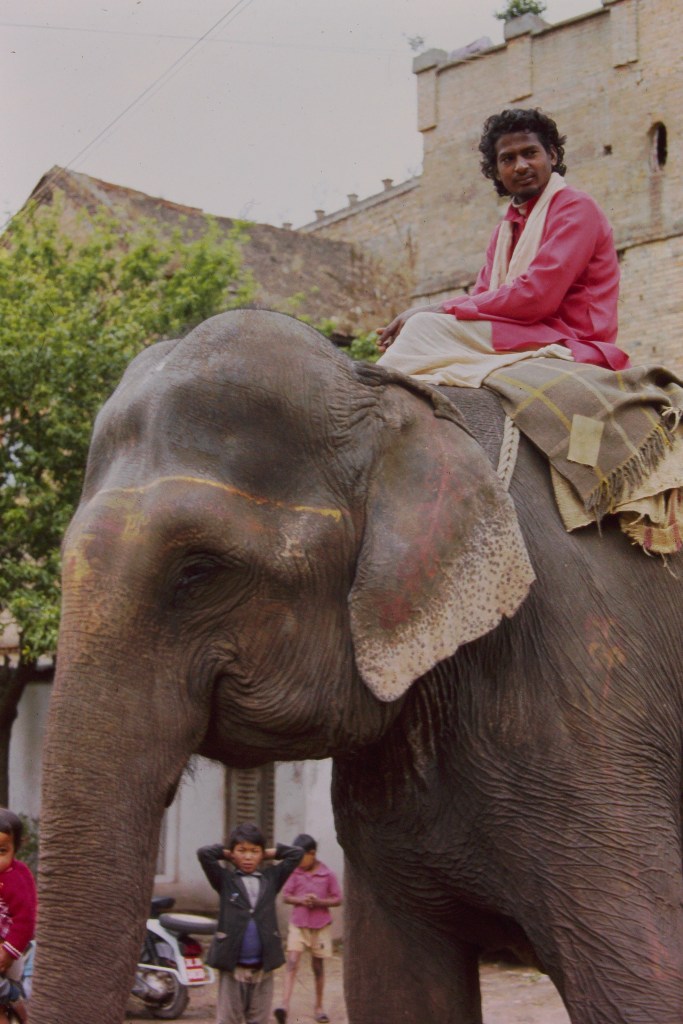
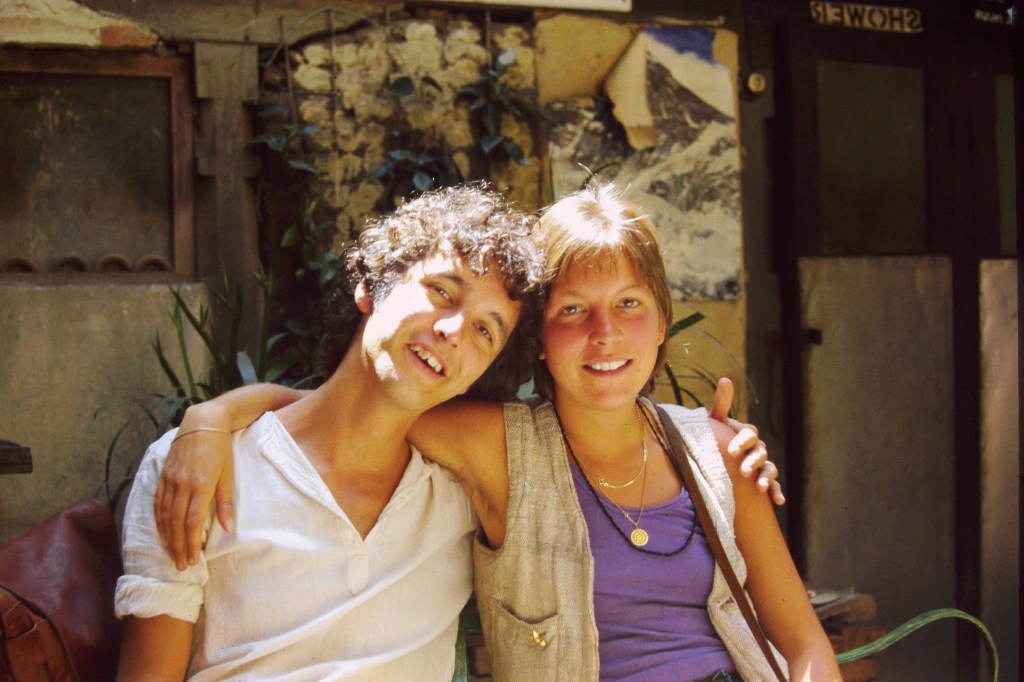
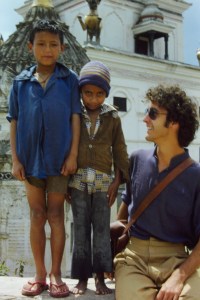
I was relieved to arrive in Pokhara which felt clean and fresh and uncrowded. I looked in at the local post office and was overjoyed to find a note from Michael reading “Last chance for sweet romance. Am in Kathmandu till April 6. Be there or be square. Love Mi.” Getting to Kathmandu was a challenge as there was a strike by bus drivers and only one mail bus a day was travelling the busy route. For the first time I fought like a local to gain a seat and ended up balancing precariously with the luggage on the roof for the long windy trip. It was all worth it when I found Michael, looking skinny but strong after a Himalayan trek, brushing his teeth at the outdoor sink at the wonderfully dilapidated Century Lodge.

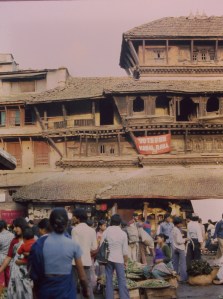
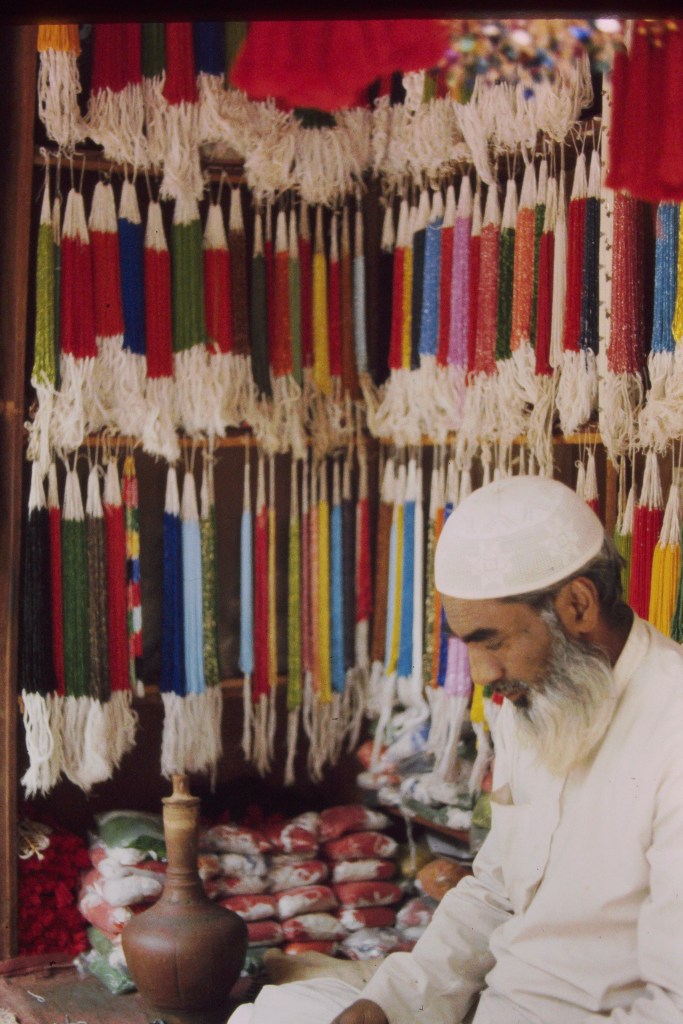
We had ten glorious days exploring the fascinating city, getting high, eating pie, wandering the temples and warrens of cobbled streets lined with crumbling ornate structures. Wealthy climbers and their entourage have been using Kathmandu to gather and prepare for their Himalayan conquests and to celebrate a safe return since the 60s. Luxury hotels and restaurants catering to international tastes had emerged serving Buffalo steak, fancy wines and cognacs, and more importantly, had introduced the local culinary scene to pie. All kinds of pie were displayed in grimy windows in front of soot filled hole in the wall shops, cherry, apple, coconut, custard, banana, or my fave, peanut butter chocolate.

Cannabis has been legal in Nepal since the 70s. It is widely used in Ayurvedic medicine and spiritual practices and of course recreationally by many travellers. On the infamous Freak Street there were plenty of “pie and chai” shops and a constant haze of hash smoke rising from chillums, the perfect combination of gustatory delights for the multinational stream of trekkers, hippies and stoners passing through. Some never left


Michael made friends wherever he went

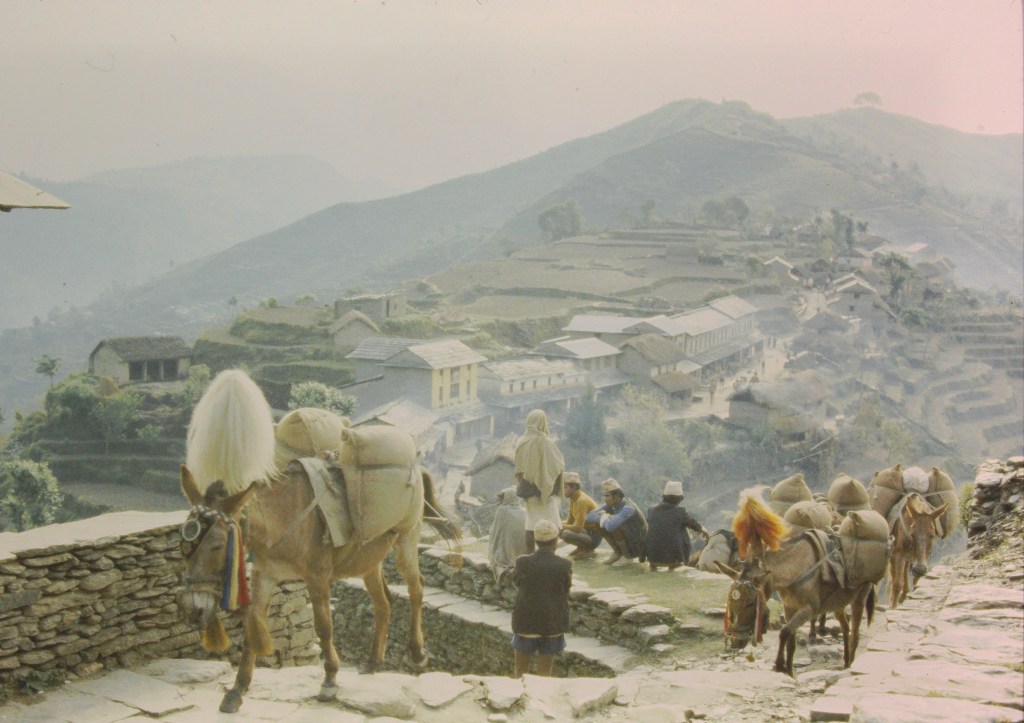
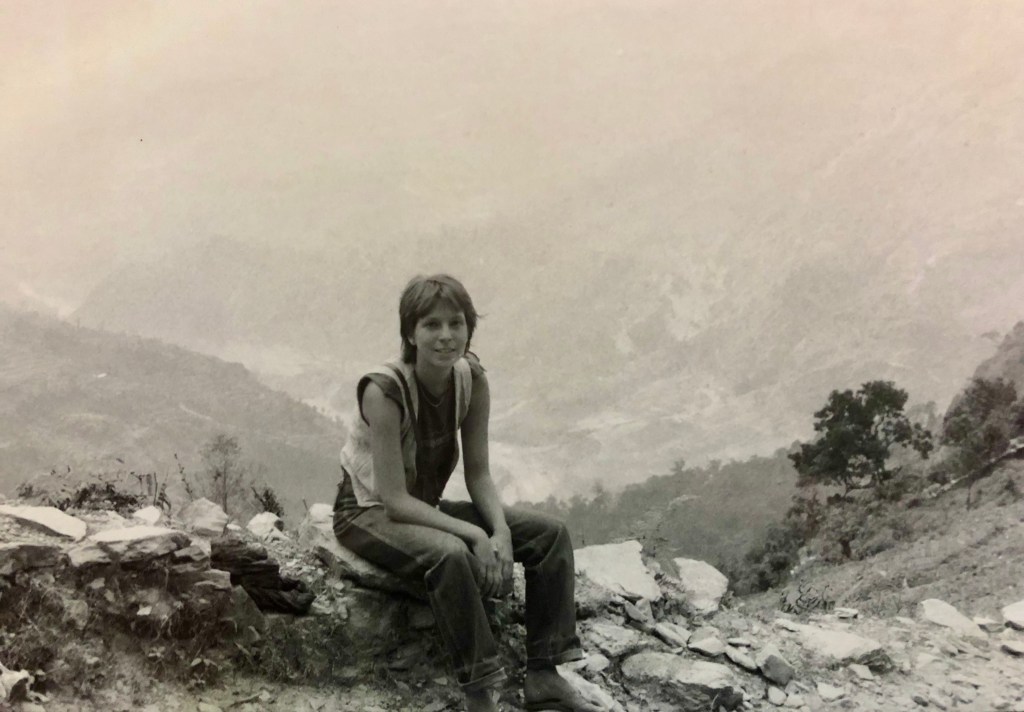
After Michael left I finished off my epic journey with a ten day solo trek in the foothills of the Annapurna Range, one of the easiest treks but still challenging for me. The Nepalese people I met along the way were open-hearted and kind, they walked by my side and shared smiles and whatever gruel type food was available. In the early mornings there were glimpses of the Himalaya range before the fog rolled in. I always found a roof of some sort to sleep under, often sharing with a goat or a chicken or two. 

Finally, after four and a half months my $600 had run out. I cabled home for money for a plane ticket. The idea of returning to the concrete jungle of Toronto filled me with dread, so, much to my mother’s chagrin, I purchased a ticket to sunny Portugal where I had friends and a job waiting.

Coming down the mountain. No, I did not do the whole trek in flip flops!

That wild winter was my initiation to real travelling. Michael was my catalyst and mentor, he was the one who inspired and challenged me to leave the comfort and mediocrity of middle-class life in Canada and explore the world, with no real goal except to seek out adventure and fun and the perfect beach.  Of course along the way we learned so much about ourselves and the world around us, we widened our horizons in every direction. Everything seemed within reach and ripe for discovery. We learned about geography and history, about religions and languages, food, flora and fauna and how huge and small and dangerous and fragile our precious planet is. We learned how a smile, an offering, a kind gesture can surpass words. We witnessed poverty and cruelty always knowing we had a way out. I learned I had won the lottery in life and not to take my privilege for granted. I like to think I learned to be grateful, but I still need a reminder sometimes.

The next time I saw Phil was in Toronto. He had emerged from the ashram with a loving aura and a new name, Dipalmo, was wearing fire colours and a beatific smile. 

Michael moved to New Orleans a few years later to start a life with his new love. Tragically he died soon after of AIDS at the tender age of 29, leaving so many broken hearts behind. I am sure that his bout of hepatitis in Asia left his liver compromised, his immune system weak, and shortened his life. At the time we laughed it off as another adventure, we thought we were invincible and that nothing could stop us.

 Michael was my best friend for years. He was ridiculously funny, brilliantly creative, curious, gentle and kind. He made friends wherever he went. He made people laugh. He celebrated life. I still think about him often and am endlessly grateful for his friendship, the time I had with him and the many memories. I wish I believed.

Art Matters

Three years ago on Valentines day my mother, six weeks before her 90th birthday, died. It was sudden, but not unexpected. She was done with her evermore restrictive and boring life. I could hear the desperation in her voice the last dozen times I talked to her on the phone from my home on Vancouver Island. I had known somewhere in my heart that when I said goodbye to her on her dark, cold front porch in Toronto in late December, that that would be our last hug. I am strangely proud of my mother for her sudden exit, her last act of defiance. She saw a future of increasing loss of independence and invasive personal care and wanted none of it. So she left us to mourn her and celebrate her courageous and wonderful life.

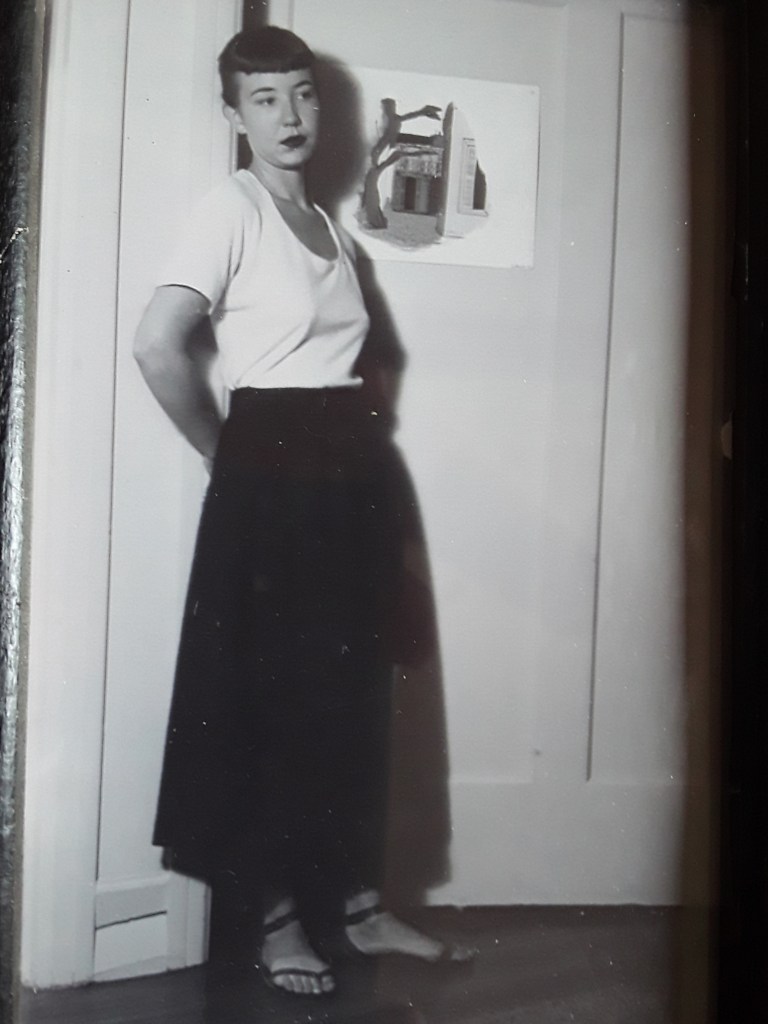
Mom bequeathed all of her personal “effects” to her three daughters, Kathryn, Madeline, and I. Wow. So much stuff. Clothes, piles and piles of clothes, some brand new, some designer, mostly black. Overflowing bookshelves, from Rex Stout to Marcel Proust. Bags of shoes. And her art collection. Paintings, prints, posters, sculptures, framed mirrors, handmade jewellery, curated by her, part of her, and part of our lives together. We grew up with the paintings, and some of the artists names and their work became part of our family story.

My mother amassed a small collection of works by California Bay Area artists from the 40s, 50s and 60’s when she lived in Berkeley. She bought or was gifted pieces, often from the artist, some of whom were her friends, or from friends or friends of friends. Over the years she added to her compilation, her taste was unique and often surprising.

My

Growing up in a large religious family during the depression, Mom’s early life was bereft of art, music (except for a piano on which Mom and her sister were taught hymns), books, other than the Bible, and for the most part, joy. When she was able to leave the farm and find independence and friendship as a young adult, she surrounded herself with creative and interesting people. She took advantage of every museum, art gallery and concert available to her. After many challenges and much hard work she received a BA and a MA in Art History from the University of Berkeley, California. She went on to build a career in Toronto teaching art history and the history of costume and design. She loved teaching and was a mentor for many of her students.

Almost everything I know about art, literature, opera and classical music I believe began as a seed that was planted during my first ten years. Mom started taking us to museums and concerts and plays when we were infants, she wanted so much to give us what she was deprived of. We had reams of paper, an easel and paints. We had books galore and listened to opera, jazz, and children’s programs on KPFA, our local PBS radio station. We had crafts, cats and Persian carpets. We were being groomed to be able to appreciate what our parents valued and perceived as the good things in life.

Despite my mother’s hopes and dreams I did not follow in my parents academic footsteps. I hated formal education, or as I saw it, oppression, and left school at fifteen. My mother, although undoubtably disappointed, always supported my adventures and found reason to be proud of me.

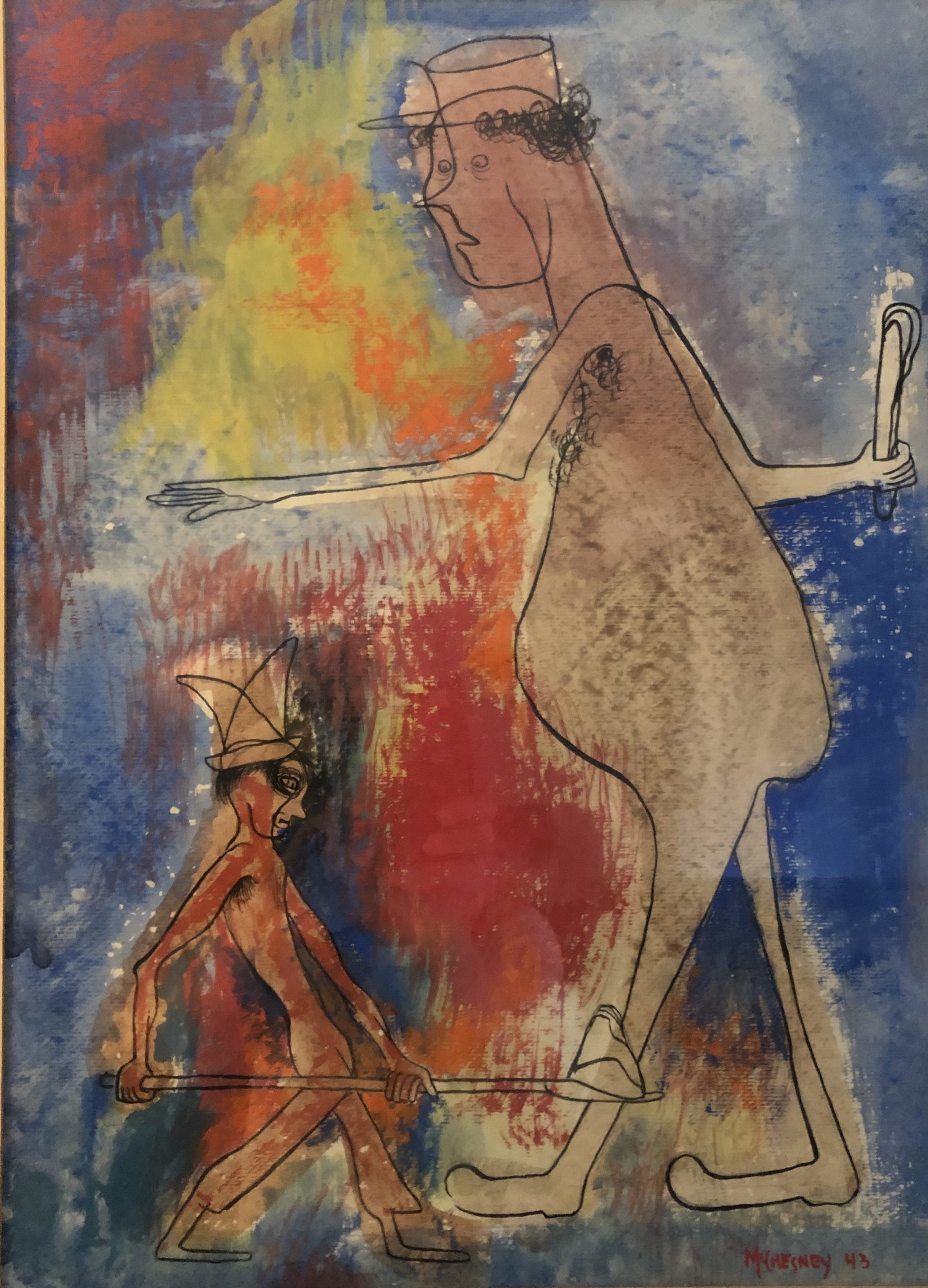
After she died, Mom’s house, lived in by her husband, stayed pretty much the same for a couple of years. Her presence was palpable and being surrounded by her things when I visited Toronto was comforting. The last time all three of her daughters were at the house last summer we got busy and emptied closets and drawers and took an inventory of her art collection. And then to decide what to do with our legacy. Although all of us do carry on much of Mom’s style, in our own way, many of the pieces that we grew up with loved just did not fit into our lives. We decided to each choose a painting from her collection. I chose this.

Big Man Little Man by Robert McChesney, 1913-2008. McChesney was known as one of the “progenitors of Bay Area abstract expressionism”.

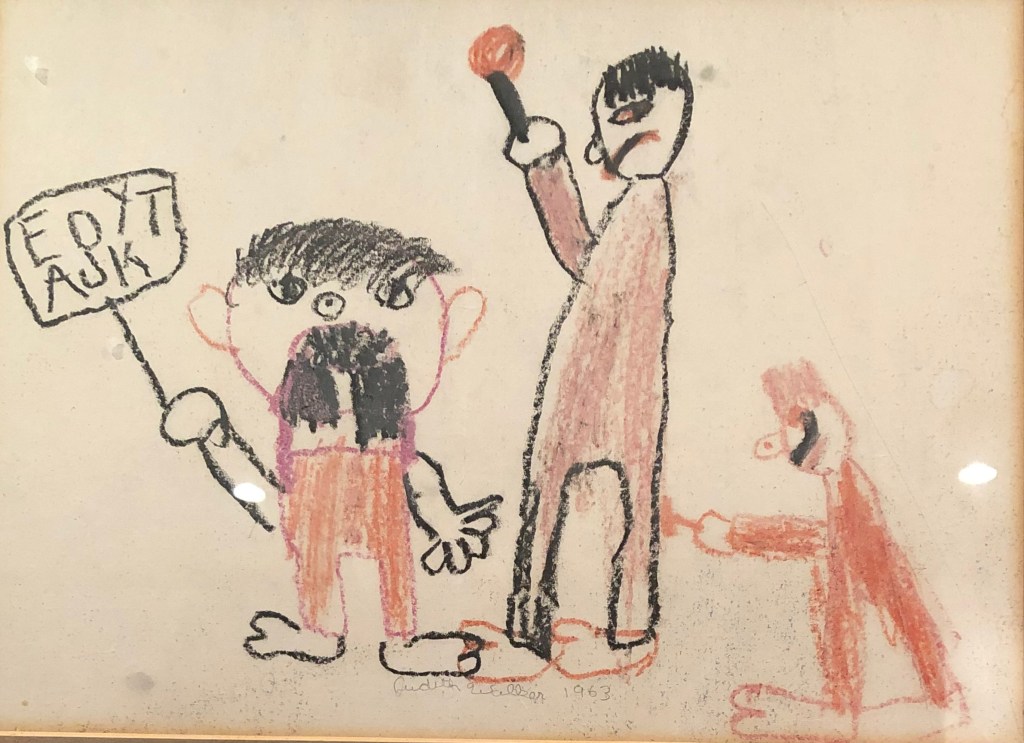
It was an easy choice. This wonderful piece was undoubtedly inspired by the by coal miners strikes in the 1940s. As far as I know Mom did not have a personal connection with McChesney, he was possibly a friend of a friend, or she just liked this piece. I wish I could ask her. Mom always told me that this painting was mine, partly because of a crayon drawing I did at age six. This is the story that became a family legend, most likely part fact and part fiction:

In 1963 we were living in Berkeley where my parents were students at the University. This was during the time of the civil rights movement and growing protests by the Free Speech Movement that took over the campus during these turbulent years. My father, a life long leftist and human rights advocate, joined the marches when his work at the University and domestic commitments allowed. One day he took me along and I rode on his shoulders observing the surrounding unrest. When we returned home my mother was most certainly annoyed at Dad for placing me in danger, but all was forgiven when I produced this drawing of a protester holding a sign with a profound message known only to me, being attacked by the mean guy, who is turn attacked by the little guy. My mother proudly framed it and it ever after hung side by side with the wonderful McChesney painting. Sadly, this deeply moving image of the power and unity of the working class did not lead me to a career as a famous art. I think I peaked too early!

Big Man Tall Man Small Man. Judith Walker 1957-

The wonderful, colourful and expressive painting/drawing by McChesney hung for the last 45 years across from Mom’s desk in her cozy office. It now hangs in my living room. It took me a little while to get used to it here. I have always loved it, I think only now I realize how much.

Christmas in Oaxaca

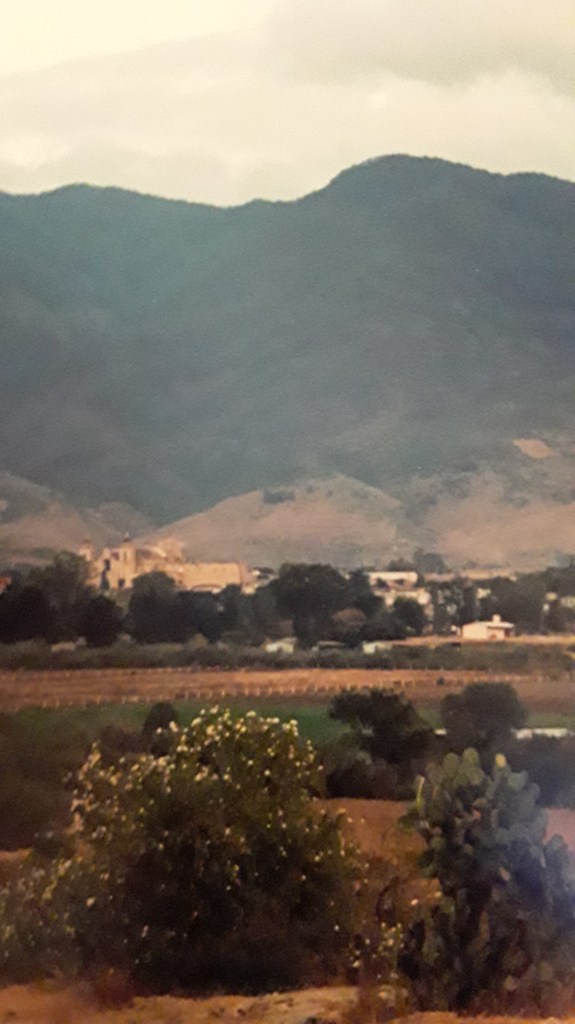
Twenty years ago this month I arrived in Oaxaca on a second class bus from wonderful chaotic Mexico City. It was early December and I had planned on spending a month studying Spanish and exploring the city and the area. On the walk from the bus station to my hostel I encountered a seemingly random and lively parade of dancers and musicians. I quickly learned that every day in Oaxaca is a reason to celebrate.

Oaxaca City is nestled in a valley in the mountains in the middle of the state of Oaxaca on the isthmus of Mexico. It is a lovely and laid back city that feels like a small town . There are no high-rises or sprawling resorts, but there are majestic cathedrals, cobble streets, busy markets, surprising and accessible art, and a wonderfully diverse population.

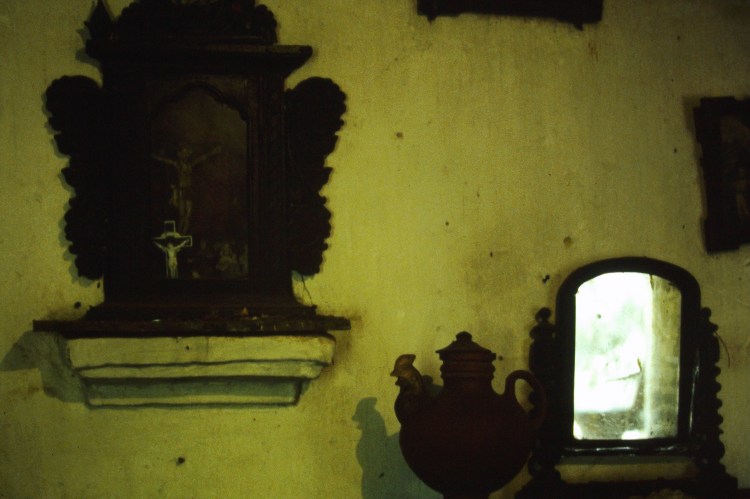
I rented a room in a rambling colonial era building that had once been a convent. My room probably hadn’t changed much since it was occupied by a nun, but had gained the addition of a hotplate and tiny fridge. The showers, toilets, laundry sinks and clotheslines were in the scruffy back courtyard. My new home was right around the corner from my school and I loved it. Single bed, crucifix and all.

At school I met my instructor Enrique who was a kind young man, passionate about teaching his language and sharing his culture. He remained equanimous while teaching students from all over world, with a range of ages, genders, sexual orientation and fashion choices who often came to class hungover and ill prepared. Enrique was traditional but opened minded and accepting, endlessly patient, and a great teacher.

I spent a few hours a day in class or studying, and then wandered the streets discovering street art, pop up markets, and obscure neighbourhoods. And eating. Eating everything everywhere. I barely skimmed the surface of the extraordinary offerings in this culinary capitol of Mexico. The most humble of market cafes and street stalls served meals with astounding flavours from recipes and methods built on tradition and passed down for generations. I would sit and watch endlessly, ordering small plates of this or that, yearning to learn. Occasionally I would dig through my vocabulary and find words to ask a question of the proud women who presided over the multiple steaming pots and pans. I almost always received a warm, if slightly bewildered smile, and usually some words or sign language to attempt to answer my naive queries. Surprisingly, I learned a few tricks from these matriarchs who kept the fires of their ancestors burning.

A weekly pop up market in my neighbourhood. I think Batman is riding the carousel in the background.

In the evenings my fellow students and I would find each other in a cafe on the zocalo, drink some beer and practice our verbs and tenses. Occasionally we would end up in a noisy mezcal bar, where music and dance and laughs surpassed all language and cultural differences. Good times.

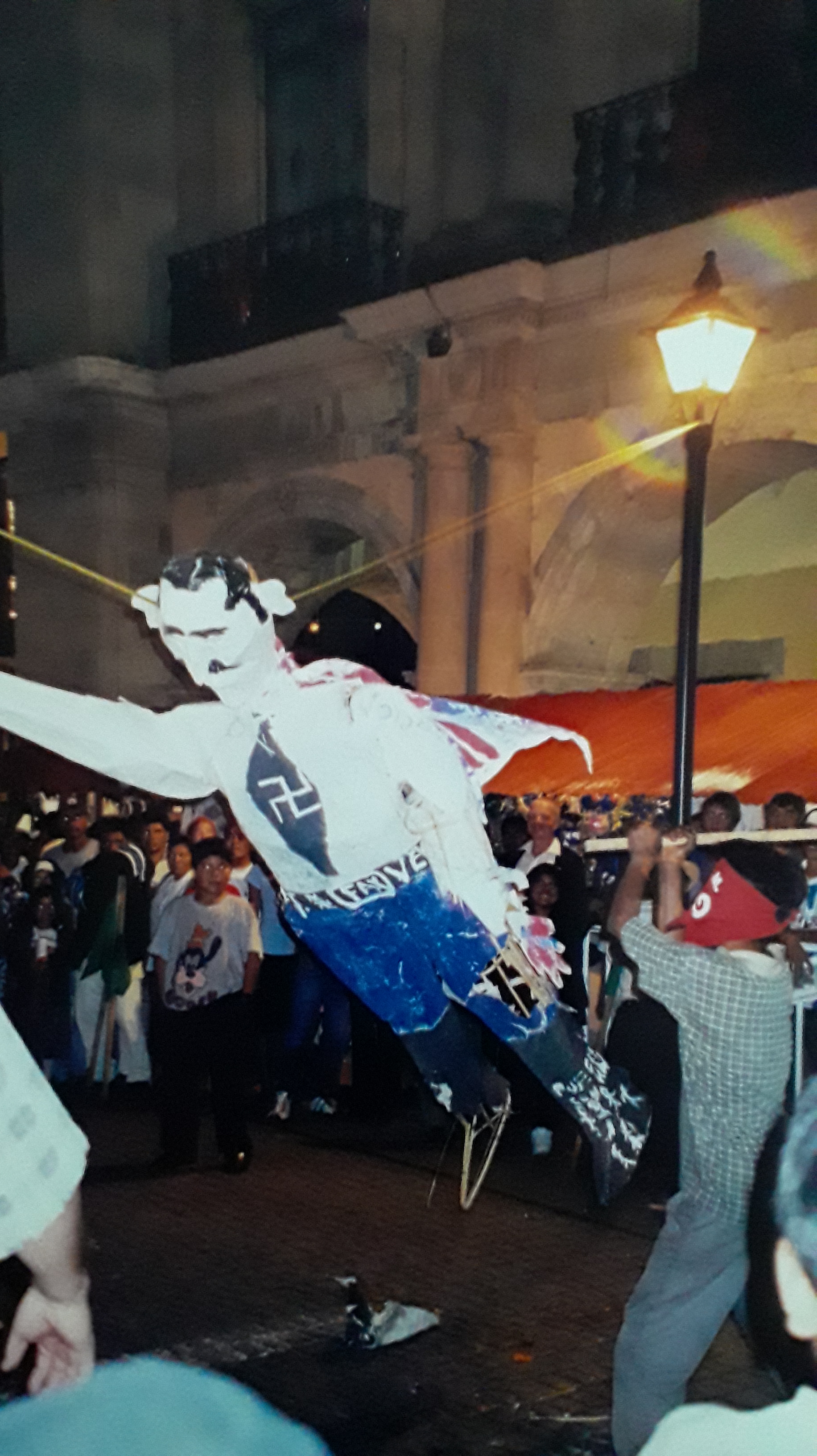
Christmas in Oaxaca starts ramping up December 16 which is the first of the nine nights of Las Posadas. Las Posadas is celebrated throughout Mexico and Central America. It is a series of processions portraying the journey of Mary and Joseph searching for an inn (or posada) in which to bring baby Jesus into the world. I had a front row seat on the stoop of my building in the evenings as a parade of children holding candles, appropriately adorned pets and farm animals, decorated vehicles and carts slowly wandered by, always followed by an exuberant band of musicians. They would all end up in the main zocalo where pinatas were hung and smashed and many clay bowls of hot chocolate consumed.

The main zocalo, or plaza, is an ongoing and ever changing party and a platform for performance art, political demonstrations, religious gatherings, live music, markets of all descriptions, side shows, humble cafes and fancy restaurants. It is also the centre of political activism which is very present in Oaxaca, one of the poorest and most militant of the Mexican states. When I was visiting there was a contingent of the families and supporters of political prisoners who had been occupying a corner of the square for four years. So determined, so strong, and so absolutely committed to the their cause.

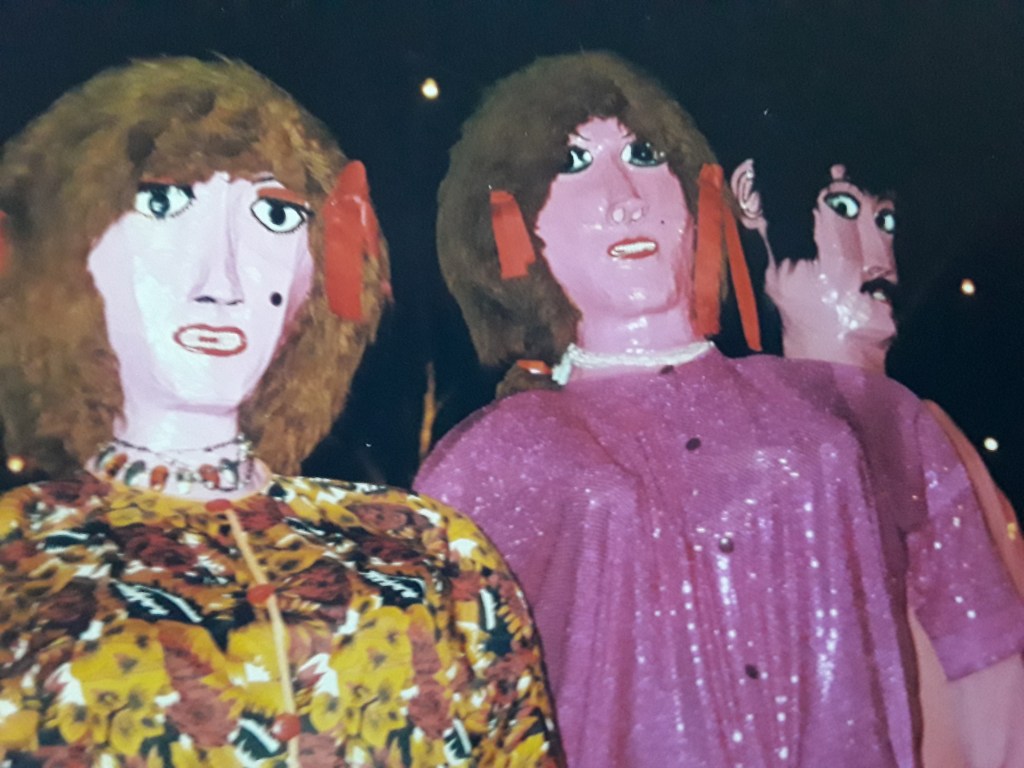
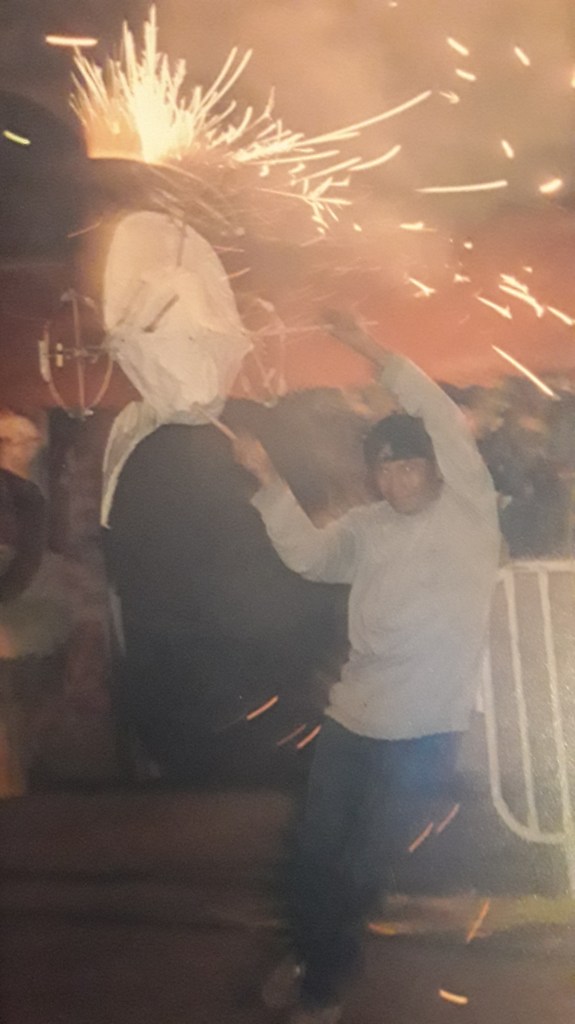
On December 23rd the zocalo is taken over by radishes. Yes, it is A Noche de Robanos, The Night of the Radishes. I decided not to dig into the history of this unique tradition and just enjoy it. Giant radishes are carved into incredibly ornate scenes that are displayed for competition and for all to wonder at. There were a lot of the ever popular nativity scenes but daily life was also represented, as well as pre-columbian gods, and for some reason, quite a few elephants . There were some astonishing works of art that produced some equally astonishing smells that permeated the square. A truly unforgettable event. The 24th is the night of Las Calendas, an impressive procession of floats from all of the parish churches, accompanied by live music and fireworks, as are all events in Mexico.

Every day there was another discovery, another lesson, another revelation. And another reason to celebrate. But the ultimate Christmas experience was yet to come.

The week before Christmas Enrique had asked us all if we had somewhere to go to celebrate the day. A few of us said no, and he invited us to join his family for their fiesta.

It turned out that this year Enrique’s family had the honour of hosting the whole village, around 1500 people, for the Christmas Day celebration. This huge responsibility was passed around the community by some mysterious lottery involving cake and baby Jesus, or so I understood. On Christmas day I met with my fellow students, an elderly couple from Victoria and a middle aged German punk with purple spiked hair. We joined Enrique, his fiancé and his parents at the taxi stand on the edge of town and made our way to Villa de Etla, a lovely rural village around 15 k outside the city.

Beautiful Villa de Etla.

The first event we attended was a midday mass. It was a gay affair. The church had been decorated with streamers and balloons, baby lambs who were part of the live nativity scene were bleating, and the ever-present accordion music kept things going. At the end of the sermon we all held hands with those next to us, turned each way, made eye contact and wished our neighbours the best of the season and the coming year. It was a simple yet profoundly moving gesture.

After mass we went to Enrique’s aunt’s farm where things were coming together after probably weeks of preparation. Seven goats and one bull had been slaughtered to feed the village. They had been roasting for three days in pits bedded by hot coals and layered with avocado leaves. Each pit held a vat at the bottom which collected the drippings for soup. As is traditional in Mexico, the women tended to the tortillas, setting the endless rows of tables, and all the other many other details, and the men gathered at the pits passing a bottle, cigarettes and tall tales. I had heard of this method of roasting meat, called barbacoa, and was obviously fascinated and dying to observe. I did manage to infiltrate the pits for a few minutes before I was spied and herded back to the women and children.

The fiesta was kicked off by a lively nativity play performed by over excited kids and various misbehaving farm animals. So hilarious and so sweet. We then feasted on goat soup followed by goat tacos with handmade tortillas and bowls of steaming black beans. Following the meal, jugs of mezcal appeared and the music started up, one rock band and one traditional ranchero group, often playing at the same time. We danced till the wee hours. My German classmate had been taken over by an elderly man who seemed quite smitten, Enrique’s dad was tipsy, much to his wife’s embarrassment, and this magical Christmas ended with a harrowing taxi ride back to the city.

I will be forever grateful that I had the opportunity to spend Christmas with these generous and warm people. Enrique, his family and his whole village welcomed a motley crew of gringo strangers to their family fiesta with open hearts and smiles. What a beautiful gift.

This year I will be spending the Christmas season on Vancouver Island. My own motley crew of immediate family members will be gathering at my humble abode for a change and I am so looking forward to that. I have spent many winters travelling, mostly in my beloved Mexico, where a part of heart will always be. I do feel the stirrings of itchy feet often, but for now will stay close to home and my family and enjoy and explore this beautiful part of the world. I know my Mexico will be there when I am ready.

Love, Oysters, Death

I am posting this blog on the ninth anniversary of my Jimmy’s death. He died of an overdose of fentanyl that was prescribed by his doctor. He was 42.

Like most addicts Jimmy experienced physical and mental trauma at a young age. He coped as well as he could but struggled and depended on various substances to get through life.

It is time to see this overdose epidemic for what it is, a mental health crises. I have no idea how to even begin to solve this huge issue, as I had no idea how to heal Jimmy. Love was not enough. But to start the healing we need to recognize the problem. We need to leave the shame, blame, guilt and denial behind and stand up to the truth with honesty and transparency, addiction is rooted in trauma.

On a lighter note I want to share something I wrote a few years ago. Jimmy loved me and our life together, our cats, our home, our business, and his mother so very much. Life with him was never boring, we spent more time loving and laughing than fighting, I am grateful for the adventures, the hilarity and the meals we shared. Food is my language of love.

Jimmy and our beloved Lulu

Meals with Jimmy

I met Jimmy when I was working at a fancy wilderness resort in a remote location on Vancouver Island. I was hired to work in the lodge kitchen but spent a couple of months every spring cooking for the many staff and contractors as they prepared the resort for another busy summer season. There were horses and trails to groom, infrastructure to upgrade, and boardwalks and buildings to construct or repair after a punishing winter. Jimmy was one of the scruffy gang of local lads who had pretty much built the resort and kept it running. Raised in the rainforests and on the ocean they were used to working in remote locations and under harsh conditions and were resourceful in using what was available to get things done.

After breakfast Jimmy would don his duct tape repaired rain gear and disappear into the forest with a chainsaw, a jug of gas and a case of beer. He would emerge ten hours later filthy, tired, and often soaking wet. He started courting me in his own way, by washing my pots and pans and helping in the kitchen when he had time. When my weekly grocery delivery was unceremoniously dumped, often soaking wet on the deck at the end of a long day Jimmy would be there, smelling sweet after a shower, to help me unpack and store the goods. He stole my heart the night he packed a thirty pound halibut into the kitchen and saw the look of dismay on my face. He then grabbed it by the tail, and with a cigarette dangling from his lips dragged it onto the deck and, in the dark, butchered it, filleted it, placed it on a tray and slid it neatly onto a rack in the walk in fridge for the next days fish and chips. He made Yorkshire pudding for twenty or so people for our weekly roast dinner, no recipe, perfect every time. I was smitten. I thanked him by spoiling him with omelettes, cheeseburgers, and a flirty smile.

Jimmy had bad hair, bad teeth and some bad habits. He also big beautiful blue eyes, a strong work ethic and was fiercely loyal to the resort, to his family, his friends, and to me. I resisted, he persisted, I caved, he won. A year later we were living together in my little house by the lake.

We both loved food but had different ideas when it came to meals. Jimmy loved hotdogs and would grill a whole pack. And ice cream, he could eat a litre of Breyer’s tiger tail in one sitting. And cheeseburgers with bacon. He fucking loved them. He ate five one day. Moderation was not his strong point. One thing we both loved was seafood. Being born and raised by the sea he knew where to get it and how to prepare it. This was one of our favourite meals:

Panko fried oysters Tartar sauce Coleslaw Garlic bread

I fucking love oysters and am lucky to live on an island surrounded by the cold Pacific Ocean, perfect for oyster beds and breeding. I have recreated an altered version of this meal often since Jimmy’s death. These days I don’t bread the oysters, I sear them in brown butter with lots of lemon and fresh parsley. I usually skip the tartar sauce, the juice from the oysters and the butter and lemon make a perfect glaze.

“You are eating the sea, that’s it, only the sensation of a gulp of sea water has been wafted out of it by some sorcery, and you are on the verge of remembering you don’t know what, mermaids or the sudden smell of kelp on the ebb tide or a poem you read once, something connected with the flavour of life itself…” On tasting Brittany’s oysters, from “The Oysters of Locmariaquer ” by Eleanor Clark.

Please stand by your loved ones, all of them, even when it feels hopeless. Reach out, advocate, communicate. And eat oysters. Peace and love to you all.

Jamaican Holiday

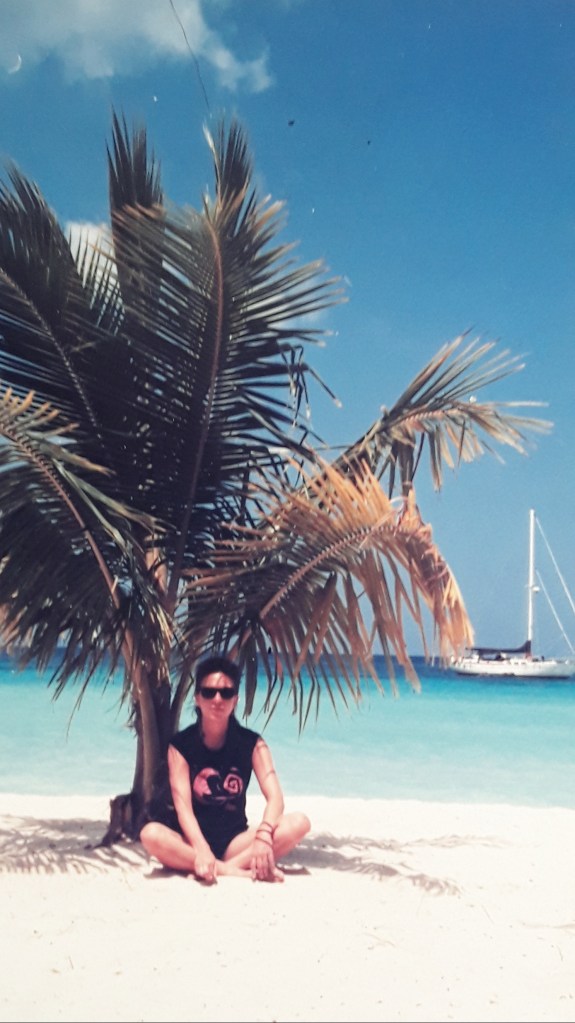
The first time I ate or even heard of jerk was in Negril, Jamaica with my sister Madeline in March 1984. We were staying in a tiny bamboo shack on one of the most beautiful beaches in the world. We stumbled across a beach bar called De Bus one evening…named for an old school bus abandoned and sunk in the sand a little ways into the jungle. The cooking all took place on a wood fired grill fashioned out of an old tin drum. Picnic tables in the sand were covered with sticky oilcloth and lit with candles protected from the breeze by inverted plastic coke cups. We waited a long time for our food, our feet in the sand and a cold Red Stripe in hand, the ever present reggae blaring from a ghetto blaster . Then the jerk pork arrived….and explosion of xxx hot chillies, warm spices, cool citrus…charred on the outside and slippery soft in the middle. It was almost too spicy to eat but impossible to stop.

Total sensory overload. Never to be repeated.

Beach bum

There are some good commercial jerks out there, and a lot of bad ones. I like to make my own. A real jerk must contain scotch bonnet peppers, allspice, and fresh thyme. There are many different recipes and versions of the history of jerk and the meaning of it’s name. What is certain is that jerk is unique to the beautiful island and people of Jamaica and has been part of their culture for centuries.

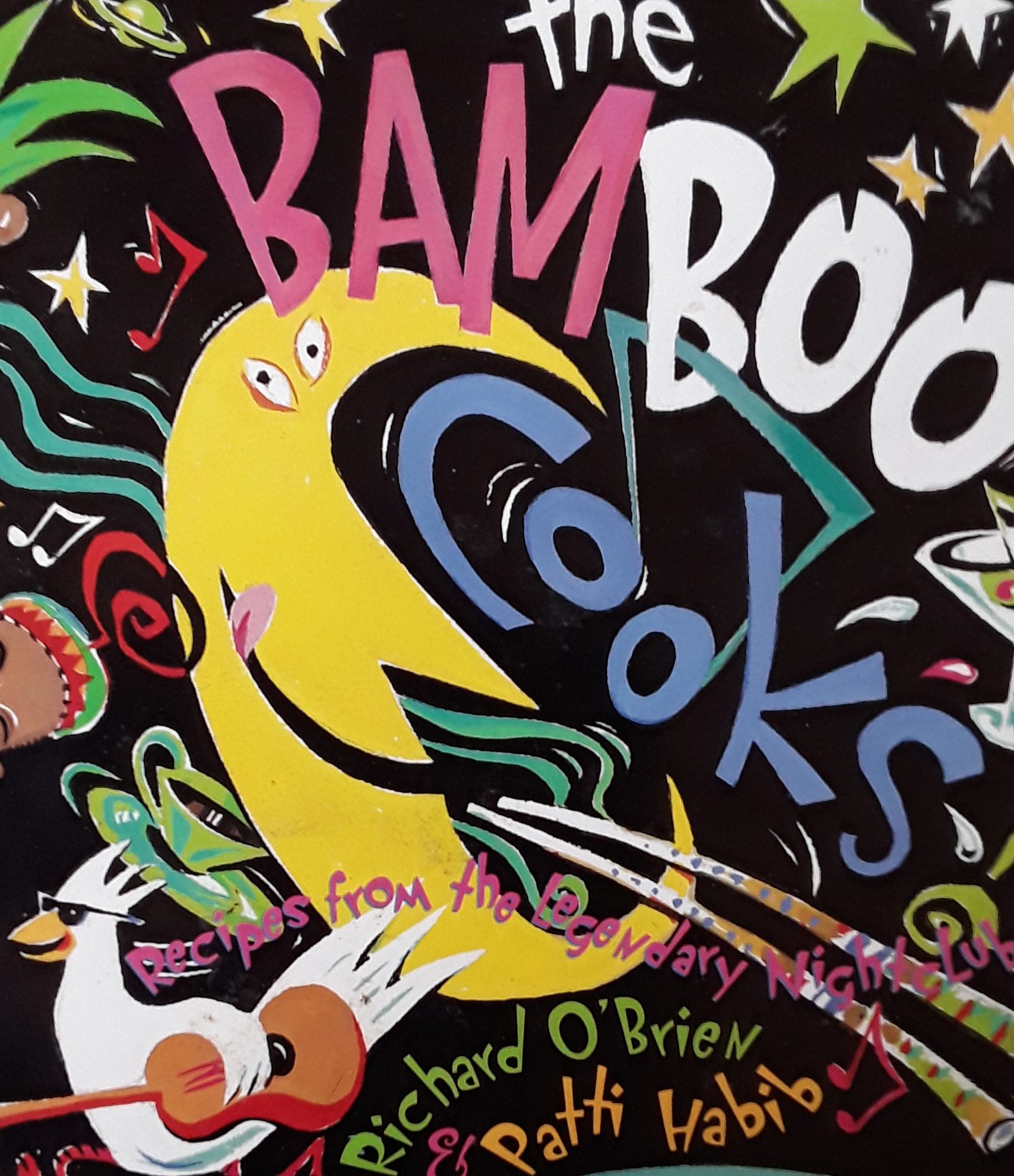
This recipe is loosely adapted from the kitchen at the BamBoo Club, our go to place in Toronto in the 80’s and 90’s for Caribbean and pan Asian food, live music, booze and all round good vibes. You could step off of Queen St, through the narrow gates of this gem and arrive in another world. Bright coloured tiles led you through a ramshackle patio with picnic tables, tiki torches, a fountain, and overgrown greenery. Make your way past the cute, stoned, friendly “security” and walk into a wall of blasting world music, dancing bodies, cigarette and reefer smoke with servers writhing through the crowd carrying trays of cocktails, bowls of hot and sour soup and platters of spring rolls. It was the best party in town. I worked briefly on their rooftop patio, manning the grill and calling out customers on a megaphone. I was much happier as a patron.

Art work by the wonderful Barbara Klunder. The BamBoo was filled with her colourful images.

Jerk Marinade

Jerk is a very dominate flavour and requires a long marinade and slow cooking. For those reasons I do not use it on fish, but feel free to experiment. I have not tried it on beef.

-3 healthy green onions chopped

-1 medium onion chopped

-4 juicy cloves of garlic diced

-3 or 4 scotch bonnet (or habenero) seeded and fine dice. Definitely add more if you’re into fire breathing. Other peppers cannot be substituted.

-1/2 cup fresh lime, lemon or orange juice

-2 tablespoons soy sauce

-3 tablespoons olive oil

-I 1/2 tablespoon coarse salt

-1 tablespoon brown sugar

-1 tablespoon fresh thyme …or more if you have

-2 teaspoon ground allspice

-2 teaspoon ground black pepper

-1/2 teaspoon nutmeg

-1/2 teaspoon cinnamon

Put it all in a blender or food processor and blend. I often freeze it which works well,

Pierce chicken (preferably on the bone) or pork all over with a fork.

Coat all pieces generously with jerk. Chicken wings are great jerked.

Plan ahead, jerk should marinate overnight or at least all day.

Grill your jerk chicken or pork low and slow.

I love jerk with a fruit chutney and some crunchy slaw.

Yum!!!!!!!

Caldo Verde, my ode to the Algarve

When I was a 21 I bought a plane ticket to Lisbon and set off to travel around Europe. I spent a few days in that beautiful city. It is built of old stone, brick streets, crumbling colonial era buildings and concrete high rises. Old and cold. So I took a train to the sunny beaches of the Algarve. I landed in Lagos and except for a six week jaunt to Spain and Morocco I pretty much stayed there till my plane ticket expired a year later. I fell in love with the place and didn’t want to leave. Lagos is a historic cobblestoned and walled town on the Atlantic, edged by yellow sand beaches and surrounded by rolling hills, farmland, vineyards and dramatic ochre cliffs dropping into the blue green ocean. I landed a job at a pub style restaurant catering to the many mostly British ex-pats and shared a house with an American woman who was working on her thesis in architecture. I was in my comfort zone, but still on an adventure.

Portugal had not yet joined the EU and almost all of the food in the markets and restaurants was locally grown or manufactured. The taste, smell, texture of the fresh bread, butter, eggs, dairy, and seasonal fruit and veg was a revelation . The abundance of fish and shellfish was astounding. The southern Portuguese style of cooking is clean and to the point. A few well chosen and fresh ingredients, cooked and seasoned to perfection and presented with little adornment. Olive oil, garlic, and bay leaves are widely used, as well as olives, lemons and chorizo sausage. Meat dishes were available, mainly locally raised pork, chicken or rabbit but seafood ruled the menus. The pastries were ridiculously delicious, I gained 10 pounds while living there.
Sardines were a staple, cheap and plentiful in those days. A plate of whole grilled sardines served with bread and boiled potatoes with olive oil was a beautiful thing. You place a salty oily sardine on the bread and tear the meat from the bone with your fingers and into your mouth, working around the head and guts, which were then stacked on your plate and counted later to see who at the table ate the most. Then you eat the bread, soaked with the oil, salt and juice from the fish and a hint of the charcoal grill. And some sliced tomatoes on the side. And a glass of cold vinho verde. In an open air cafe by the sea.

After my year long airplane ticket ran out I left on a wave of grief, vowing to return. And I did. One year later I found myself broke in Kathmandu. The idea of returning to the concrete jungle of Toronto after six months of backpacking through the Indian subcontinent filled me with dismay. I begged and borrowed enough money for a plane ticket to Portugal where I knew I had a job and friends waiting. I spent another fun and sun filled summer in Lagos and then returned to Toronto to plan my next adventure.
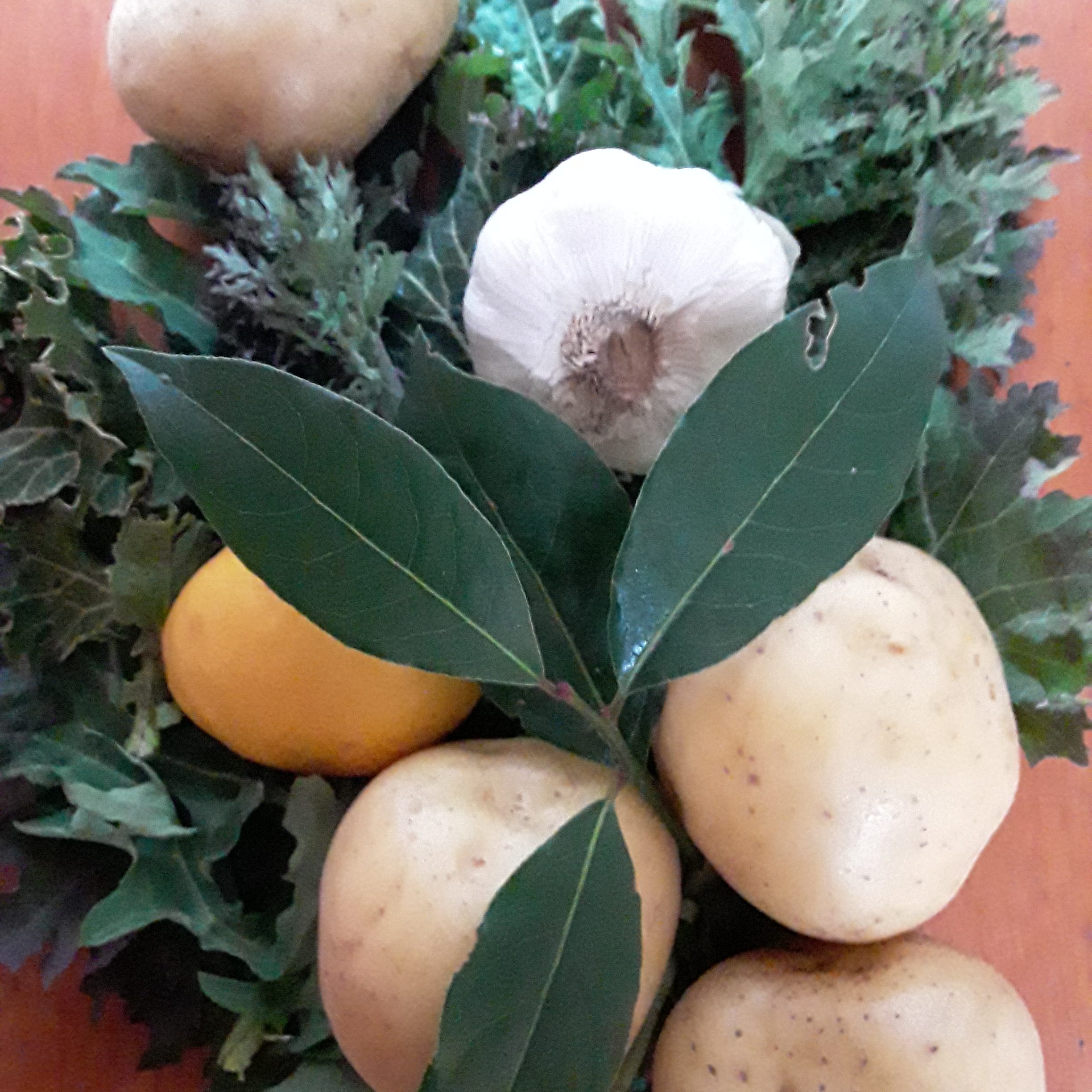
I developed this recipe while I was running the cafeteria at our local college some 30 years later. We had two soups on offer every day and they started to become repetitive. Then I remembered practically living on this in my one cold and rainy winter in Lagos. There wasn’t a lot of work after the tourists went home so I was poor and it was a cheap , delicious and cozy meal.

Sausage, usually chorizo, is often added, feel free to do this but I love it just like this. Use a rich, preferably homemade chicken stock and season properly and the sausage becomes unnecessary. I think.

Serve with fresh Portuguese buns with butter and maybe some cheese. This makes around four generous bowls.

Caldo Verde

6 tablespoons olive oil
2 big cloves of garlic minced
4 cups chicken stock, preferably homemade
4 bay leaves
1 lb yukon gold potatoes, unpeeled, cut in 1” chunks
1 bunch of kale, around 12 big leaves, ribs removed and julienned

Saute the garlic in the oil. Garlic burns quickly, keep the heat medium low and stir. Add the chicken stock and bay leaves and bring to a boil. Turn it down and let it simmer a bit to marry the flavours. Season with salt and pepper. Add the potatoes and bring back to simmer, cook until soft and falling apart a bit. At this point you can run an immersion blender through it to make a creamy soup or leave it chunky. I like it kind of in between. Add the kale and simmer for just a few minutes. Try not to over cook at this point or you will lose the pretty green (verde) colour. Remove the bay leaves. Serve with an added swirl of olive oil and a squeeze of lemon juice.

food by jude

Stories of food, travel, and family.

Skip to content ↓